By
By 
Nigeria’s oil and gas sector is standing at a pivotal moment. With production hovering around 1.7 million barrels per day and ambitious plans to become a gas-powered economy by 2030, the industry is entering a period of rapid infrastructure expansion and operational complexity.
RELATED: Virtual Reality is transforming Nigeria’s real estate and oil & gas sectors with immersive solutions
At the same time, operators are facing familiar challenges: safety risks, skills gaps, rising costs, and the pressure to operate at global standards.
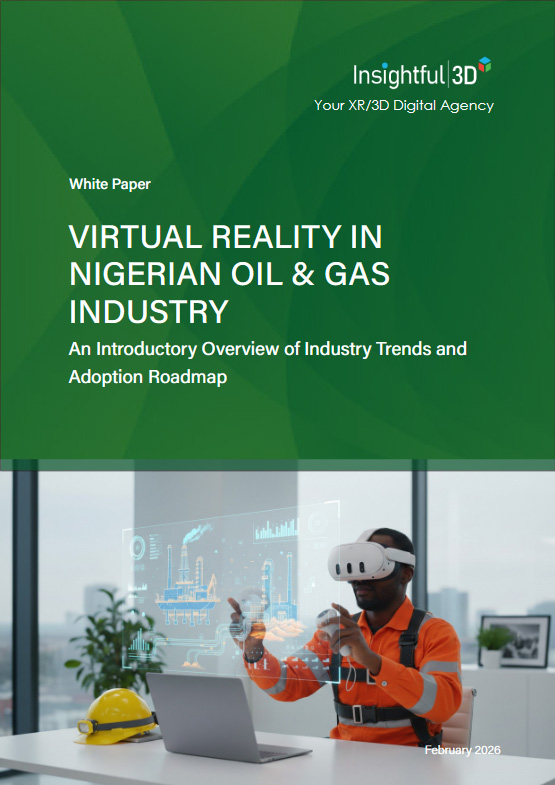
To help industry leaders navigate this shift, Insightful3D has released a new white paper: “Virtual Reality in the Nigerian Oil & Gas Industry: An Introductory Overview of Industry Trends and Adoption Roadmap”.

This paper is not about hype. It’s a practical, Nigeria-focused guide to how VR is already delivering measurable results in high-risk industries, and how local operators can adopt it in a realistic, phased way.
Why This Matters Now
Globally, VR has moved from “nice to have” to proven operational tool. The white paper highlights evidence such as:

- 32–45% reduction in workplace accidents through VR safety training
- 4× faster training completion compared to traditional methods
- 275% increase in learner confidence
- 10–15% improvements in drilling efficiency
- 15–20% reduction in maintenance costs
But the real opportunity is local. As the paper explains, Nigeria has a strong tech ecosystem and a young, digital-native workforce, yet the energy sector still struggles with scalable training and safe skills transfer. VR offers a way to deliver world-class training without needing world-class physical training infrastructure.
What You’ll Learn in the White Paper
Inside the report, you’ll find:
- Why VR is different from past “digital transformation” disappointments and why it delivers value faster and more reliably in Nigerian conditions.
- A practical four-phase adoption roadmap—from pilot projects to full integration with digital twins and advanced operations.
- Common failure points (content quality, infrastructure, vendor partnerships) and how to avoid them in the Nigerian context Actionable next steps to assess readiness, pick the right use cases, and build internal buy-in
Rather than pushing technology for technology’s sake, the paper focuses on how to de-risk adoption, prove value early, and scale only when the numbers make sense.
Who Should Read This?
This white paper is especially useful for:
- HSE, training, and operations leaders in oil & gas and energy
- Executives planning large infrastructure expansions
- Decision-makers responsible for workforce development and safety performance
- Technical and digital transformation teams exploring XR, digital twins, and immersive training
If you’re asking questions like “How do we train faster without increasing risk?”, “How do we prepare for expansion without ballooning costs?”, or “Where does VR actually fit into our operations?” This guide is for you.

Download the White Paper
The industry is changing fast. The organizations that act early will compound their advantages in safety, efficiency, and talent attraction. Those that wait risk falling behind.
Download the full white paper here: Virtual Reality in the Nigerian Oil & Gas Industry – An Introductory Overview of Industry Trends and Adoption Roadmap