By
By 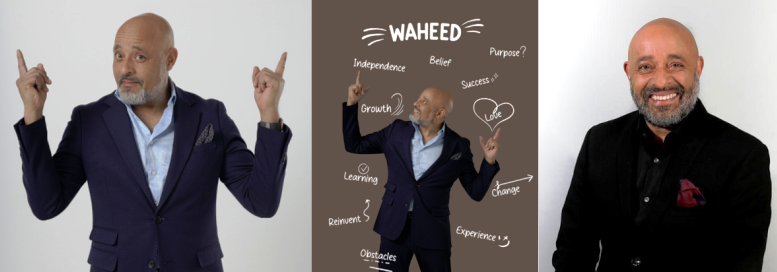
Africa’s business process outsourcing (BPO) and enterprise messaging sectors are experiencing rapid growth, positioning the continent as an increasingly important player in the global digital services ecosystem. However, this momentum may also carry emerging risks. In an exclusive interview with IT Edge News.Africa, Waheed Adam, Executive Chairman of iTouch and Vice-Chair of the Mobile Ecosystem Forum (MEF), offers a candid assessment of an industry hurtling toward a potential crisis, one driven by its very own achievements.
Reflecting on a career that began with launching I-Touch in Nigeria in 2004, Adam traces Africa’s remarkable evolution into a premier destination for call centre operations. He delves into the complexities of the continent’s current BPO landscape, addressing the growing menace of unsolicited outbound calls, the disruptive force of artificial intelligence, and what the future holds for an industry at a crossroads. Adam sat down with Olusegun Oruame, Nana Theresa Timothy, and Anna Nancy Emmah to share his insights on navigating the challenges and opportunities that lie ahead.
Can you help us understand iTouch’s journey, particularly its connection to Nigeria and how the company evolved from B2C to enterprise communications?
I launched the Nigerian office of iTouch in 2004. We were the first technology company to launch outside of a mobile network operator in Nigeria. We had a big launch event at Eko Hotel with the NTA and the business community present.
RELATED: The BPO margin crisis no one wants to talk about
iTouch has a Nigerian footprint. In 2009, an Italian company called Buongiorno bought iTouch internationally. Eventually, Nigeria was included in that sale. The iTouch that still exists in South Africa now focuses more on enterprise communications, which is a business-to-business service. The iTouch I launched in Nigeria was business-to-consumer. We launched services like ringtones, poems, jokes, and we ran the “100 cars in 100 days” competition.
Call centres are no longer innovative, they are standard business practice. There are more call centres now, and they are much larger. With international capacity growing, they also push into local markets.
Today, we focus on enterprise communication. We provide the technology stack and connectivity to networks around the world so enterprises can deliver communication to their customers. We include channels like SMS, USSD, email, and RCS. Nigeria now has RCS active through Google. We also provide CPaaS platforms and voucher management platforms. Our customers across Africa are largely banks because of our security and reliability. We’ve been in the business since the mid-1990s and are known as one of the trusted brands in the space.
You sit at the intersection of Africa’s digital infrastructure and global mobile policy. What factors have driven South Africa’s growth in the call centre industry, and how does it compare globally?
There are several factors. First is technology. The technology exists and much of it is South African-born. Second is entrepreneurship. In South Africa, like Nigeria, we don’t have strong social security systems. If you don’t make something work, you go hungry. That creates an entrepreneurial society.
Third is time zone. We are in the same time zone as Europe. If the UK uses an Indian call centre, there’s about a four-hour difference. That affects service delivery.
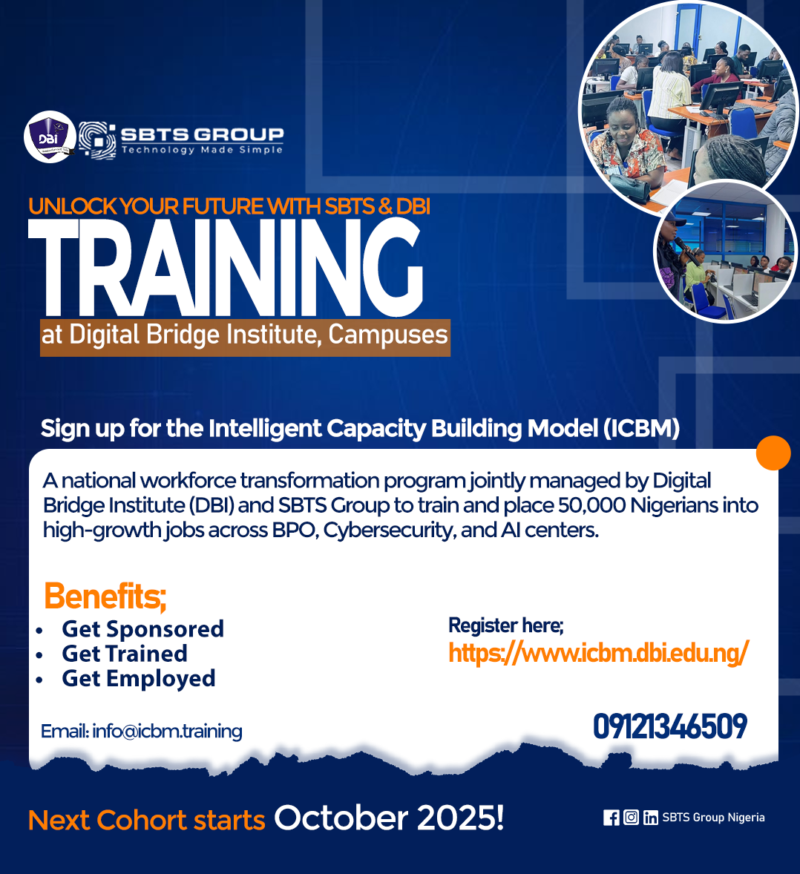
ALSO READ: DBI and SBTS unveil first BPO and cybersecurity centre in Abuja to boost digital jobs and fight youth unemployment
Fourth is language and accent. English is widely spoken in South Africa, often as a first language. Accent matters. South Africans generally have a warm tone, which is important especially for outbound call centres.
Then there’s regulation. We have strong data protection and marketing regulations, including Do Not Contact lists. Every outbound call must be checked against that database. These factors make South Africa attractive both locally and internationally.
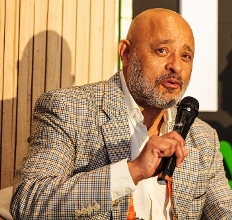
W.Adam
You started your career as a call centre agent at 14. How did that early experience shape your leadership perspective?
I was 14 when I started and became a supervisor the same year, supervising adults. Back then, we didn’t have modern call centre technology. There were no dialers, no headsets, no automated systems. Each agent had a telephone line and a printed directory. You manually selected numbers and dialed them. You could make maybe 60 to 80 calls in three hours. Today, agents can make hundreds in that time. Call centres were innovative back then. There was no internet, no online shopping. Most businesses depended on foot traffic. People answered their home phones because they didn’t know who was calling.
You learned to be charming quickly to grab attention. It wasn’t overwhelming society like it is today.
Will call centres disappear? No. Will outbound call centres find it harder if they don’t collaborate? Yes. If consumers stop answering calls, the model fails. The industry must regulate itself before regulators step in.
What role do you play at the Mobile Ecosystem Forum, and why did you join?
The Mobile Ecosystem Forum (MEF) is a global trade body headquartered in London. Its members come from across the mobile industry, messaging, security, carrier billing, payment systems and more.
I’ve been on the board for 10 years and serve as Vice-Chair. The reason I joined was simple: you cannot call yourself a global trade body if you are missing an entire continent of Africa. My goal was to bring Africa into the global conversation and highlight that innovation also comes from Africa. For example, prepaid airtime was a South African invention that became an African success story because of our unbanked population. I’ve worked to represent Africa globally and also bring the rest of the world into Africa.
Six years ago, I started a MEF event around AfricaCom in Cape Town. It has grown significantly. We’ve also built collaborations in East Africa, including Nairobi, and I’m exploring Rwanda as well. Africa is no longer overlooked in global mobile discussions, and I’m proud to be an ambassador for the continent.
There has been an increase in unsolicited calls. Why has this escalated, and why is ignoring them not always practical?
Call centres are no longer innovative, they are standard business practice. There are more call centres now, and they are much larger. With international capacity growing, they also push into local markets. That increases the volume of calls. Consumers are overwhelmed. Just today, I received three or four calls. Most people message now, so unless it’s my 92-year-old mother, calls are usually from call centres.
AI and automated systems will compete with traditional call centres, but call centres will not be done. The industry is in transition.
You mentioned outbound call centres are heading toward a crisis of their own making. What systemic issues are contributing to this?
There are simply too many call centres with large capacity. The public is becoming frustrated and lashing out. At dinner conversations, people now compare how many call centre calls they received that day. The industry isn’t measuring its collective impact. If backlash becomes strong enough, regulators will intervene. Governments regulate slowly, but when they do, they tighten restrictions heavily, which can hinder business. The industry still has time to collaborate and create guidelines to reduce consumer burden.
For example, there could be a regulator-controlled database limiting how often one person can be called. If someone was called yesterday, another outbound centre shouldn’t call them again within the same week. If the industry doesn’t self-regulate, forced regulation may damage it.
What challenges do African call centre operators face, and what is the future of the sector amid global competition and AI growth?
Outbound call centres are just one marketing channel. As long as the channel is well received, it will exist like television. However, there are other channels: internet, mobile apps, chatbots. AI is going to play a big role. AI doesn’t sleep, doesn’t worry about time zones, and can speak multiple languages if properly trained.
Will call centres disappear? No. Will outbound call centres find it harder if they don’t collaborate? Yes. If consumers stop answering calls, the model fails. The industry must regulate itself before regulators step in. AI and automated systems will compete with traditional call centres, but call centres will not be done. The industry is in transition.