By
By 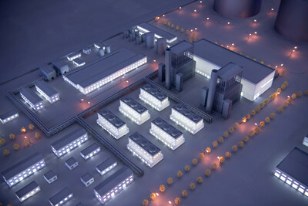
Extreme Densification and Gigawatt-Scale Growth Drive a New Era of Digital Infrastructure
Global critical digital infrastructure leader Vertiv (NYSE: VRT) says the future of data centre design and operations will be shaped by artificial intelligence (AI), digital twin technology and adaptive liquid cooling, as operators respond to unprecedented growth in computing density and power demand.
RELATED: SAS predictions: The great AI reality check of 2026
According to the Vertiv™ Frontiers report, data centre innovation is being driven by powerful macro forces including extreme densification, rapid gigawatt-scale deployment and the evolution of the data centre into a single unit of compute—trends that are redefining how facilities are built, powered and managed in the AI era.
AI Factories Are Forcing a Rethink of Data Centre Architecture
Vertiv’s Chief Product and Technology Officer, Scott Armul, said the rise of AI factories—large-scale facilities designed specifically to train and run advanced AI models—is accelerating change across the industry.
“The data centre industry is rapidly evolving how it designs, builds, operates and services facilities in response to the density and speed of deployment demands of AI,” Armul said.
“Extreme densification is driving transformative trends such as higher-voltage DC power architectures and advanced liquid cooling, which are critical to achieving the gigawatt-scale capacity needed for AI innovation.”
He added that on-site energy generation and digital twin technology will be key to improving efficiency, resilience and speed of deployment as AI adoption accelerates globally.
Four Macro Forces Reshaping Data Centre Innovation
The Vertiv Frontiers report expands on the company’s long-standing annual Data Centre Trends outlook, identifying four major forces redefining the industry:

1. Extreme Densification
AI and high-performance computing (HPC) workloads are pushing rack densities to new levels, requiring radical changes in power delivery and thermal management.
2. Gigawatt Scaling at Speed
Data centres are now being deployed at unprecedented scale and pace, with hyperscale and AI-driven facilities entering multi-gigawatt territory.
3. Data Centre as a Unit of Compute
In the AI era, facilities must be designed and operated as integrated systems, not collections of separate components.
4. Silicon Diversification
The growing mix of GPUs, accelerators and custom chips means infrastructure must support a broader range of computing architectures.
Five Technology Trends Defining the Next Generation of Data Centres
These macro forces are shaping five key trends transforming data centre design and operations:

1. Powering Up for AI
Most data centres still rely on hybrid AC/DC power systems that include multiple conversion stages and inherent inefficiencies. As AI drives higher power densities, this model is under strain.
Vertiv says the shift to higher-voltage DC architectures can reduce energy losses, cut cabling requirements and simplify power conversion by centralising it at the room level. The growth of on-site power generation and microgrids is also accelerating the move toward higher-voltage DC systems.
2. The Rise of Distributed AI
While massive AI data centres currently support large language models (LLMs), Vertiv believes the future of AI will be more distributed.
Highly regulated sectors such as finance, defence and healthcare may increasingly rely on private or hybrid AI environments to meet data residency, security and latency needs. This shift will require flexible, high-density power and liquid cooling solutions—either through new builds or retrofitting existing facilities.
3. Energy Autonomy Becomes Strategic
Backup power has long been standard for data centres, but today’s widespread grid constraints are driving a move toward extended energy autonomy.
Investment in on-site power generation, including natural gas turbines, is becoming more common, supported by strategies such as Bring Your Own Power and Cooling. For AI data centres in particular, energy independence is emerging as both a resilience and growth imperative.
4. Digital Twins Transform Design and Operations
As AI workloads grow denser and more complex, speed to deployment has become critical. Vertiv says digital twin technology is reshaping how data centres are planned and delivered.
Using virtual models, operators can design and integrate IT and critical infrastructure before physical deployment—often using prefabricated modular systems. This approach can reduce time-to-token by up to 50 per cent, helping organisations scale faster toward gigawatt-level capacity.
5. Adaptive, Resilient Liquid Cooling
Liquid cooling is rapidly becoming mission-critical for AI environments, and Vertiv says AI itself will soon make these systems smarter.
By combining AI-driven analytics with advanced monitoring and control, liquid cooling solutions can become more predictive—identifying potential failures, optimising performance and improving uptime for high-value hardware and workloads.
This trend is expected to significantly boost reliability, efficiency and operational resilience across next-generation data centres.
Vertiv’s Role in the Global Digital Infrastructure Ecosystem
Operating in more than 130 countries, Vertiv delivers critical digital infrastructure solutions to data centres, communication networks, and industrial and commercial facilities worldwide.
Its portfolio spans power management, thermal management and IT infrastructure, from the cloud to the network edge—helping organisations maintain continuous operations, optimise performance and scale confidently in an increasingly complex digital landscape.