By
By 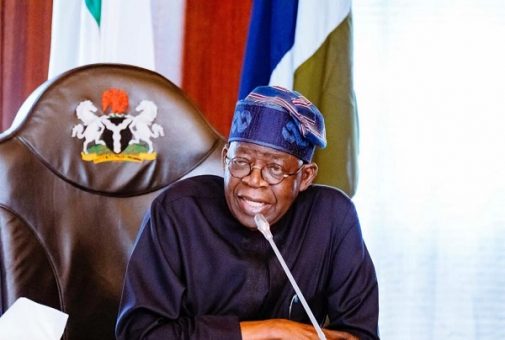
Tinubu Signals Strong Push Into the Global Space Economy
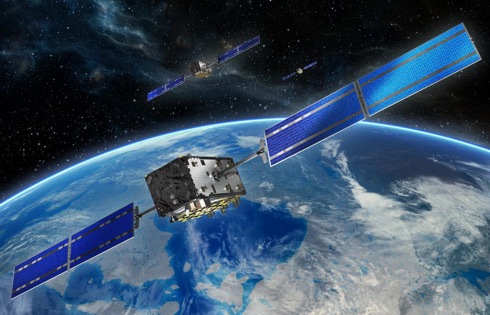
President Bola Ahmed Tinubu has directed the immediate release of approved funds for the maintenance of Nigeria’s space assets. He declared that the country will not remain a bystander in the rapidly expanding global space economy, projected to exceed $1 trillion by 2040.
RELATED: Nigeria announces historic plan for first human space flight, celebrating 25 years of NASRDA
The President, represented by Vice President Kashim Shettima, spoke at the maiden meeting of the National Space Council in Abuja. He stressed that Nigeria’s space ambitions must be driven by measurable outcomes, accountability, and tangible national value.
Nigeria Targets ₦200 Billion Annually From Space Economy
Tinubu said Nigeria is repositioning its space sector as a major economic driver. The country is targeting to generate over ₦200 billion annually from satellite communications, data services, and regulatory licensing. Central to this effort is the revitalisation of the National Space Research and Development Agency (NASRDA). This goal is achored on a revised 25-year roadmap focused on satellite maintenance for national security.Other goals within the framework are agriculture, maritime surveillance, and environmental monitoring.
To reinforce this commitment, the President approved the submission of the full implementation cost of the revised National Space Policy and Programme to the Federal Executive Council for consideration and approval.
Space Investment Key to Security, Agriculture and Digital Growth
According to the President, Nigeria’s investments in space technology are driven by its potential to accelerate technological advancement, economic diversification, and sustainable development. He highlighted applications ranging from precision agriculture and border security. Others are early warning systems for floods and fires, smarter urban planning, safer airspace, and stronger communications infrastructure.
“When we invest in space, we are not funding a distant dream. We are funding agriculture, security, early warning systems, smarter cities, safer skies, and a digital economy that can compete globally,” Tinubu said.
Stronger Regulation and Funding Enforcement
The President directed NASRDA to strictly enforce the regulatory and spectrum management framework under the NASRDA Act 2010. He urged all Ministries, Departments and Agencies (MDAs), private sector players, and stakeholders to fully comply. President Tinubu also instructed the Federal Ministry of Finance to ensure the timely release of all approved funds to support sector growth.
“We must build a programme that serves the farmer, the teacher, the entrepreneur, the soldier, the researcher, and the policymaker who must plan with evidence rather than guesswork,” he added.
Landmark Decisions at National Space Council Meeting
Briefing journalists after the meeting, the Minister of Innovation, Science and Technology, Mr Kingsley Udeh, described the Council’s deliberations as historic. He noted that several landmark resolutions were adopted to strengthen Nigeria’s space ecosystem.
These include the approval of new Conditions of Service and Staff Regulations for NASRDA to align with international best practices. It will also ensure competitive remuneration, a move aimed at curbing brain drain and retaining top Nigerian space professionals.
Expert Working Group and New Space Centre Approved
The Council also approved the formation of a multi-agency working group of space experts to refine and implement the revised 25-year roadmap. Members include representatives from NASRDA, the Nigerian Communications Commission, the National Defence Space Agency, and Nigerian Communications Satellite Limited (NigComSat).
In addition, approval was granted for the development and operationalisation of the Bola Ahmed Tinubu Space Centre in Ekpe. The centre is expected to enhance Nigeria’s satellite launch and hosting capabilities while reducing dependence on foreign expertise.