By
By 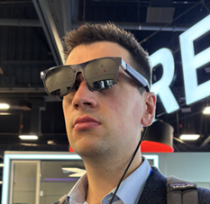
In this new release from market intelligence firm IDTechEx, Principal Technology Analyst Dr Tess Skyrme outlines three important trends for the sensor market evident from our trip to CES this year.
The narrative is shifting from Agentic AI to Physical AI
AI continues to drive a lot of conversation when it comes to technology innovations in 2026. The ChatGPT moment may have been and gone, but it’s impact lingers. It is clear that there is a narrative shift from Agentic AI to Physical AI – evident in the renewed hype we are witnessing in related markets like robotics, autonomous vehicles and digital health solutions.
RELATED: Which trends are redefining the global sensor market landscape?
Of course, those in the sensor market have known about the power of the intelligent edge for some time. There is little particularly new about leveraging advanced data processing, including AI techniques, to unlock new applications with sensor data.
For now, this is wrapped up in the new buzz of ‘Physical AI’. What is new is the feasibility of achieving this at the edge at a commercially viable cost now that AI deployment is more widespread and, as such, more cost-effective. From a marketing perspective, IDTechEx expects more messaging about the value of AI features as opposed to brand-new products for the sensor industry.
IoT technology meta-trends and impact on sensors – taken from IDTechEx’s Sensor Market 2026-2036 report.

Renewed excitement for industrial automation not a ‘quick win’ for the sensor market
This year at CES it was evident that the market is excited about the opportunity for AI to unlock the potential for industrial automation. The use of sensor technology has long been explored for industrial IoT – with applications in improved worker safety and operational planning.
Yet the hype today is more focused on the beach head market industrial automation represents for AI and robotics. Drivers for this include the long-term return on investment, which could be realized from reduced labor and energy costs, so-called ‘lights out’ operation.
However, interviews with multiple industry players on the exhibit floor also provided a dose of realism. The realistic deployment timelines are still relatively long, with estimates ranging from two to five years.
Moreover, it also easier to deploy operational digital twins which don’t require new sensor hardware with legacy installations left in place. Despite this, IDTechEx forecasts that the global sensor market will exceed US$250B by 2036, with industrial sensor technology remaining central to growth over the next decade.
Extended reality market success still needs smaller components
It’s not a successful trip to CES without trying on an array of smart glasses, and the extended reality crowd continued to be out in force in 2026. It’s no secret that the social acceptance of the hardware is seen as make or break for this market, a lot of which depends on further miniaturization of key components.

Enhanced SWaP-C will always be an important driver in the sensor market, and smaller sensor components will always be welcomed by XR OEMs. Going forward the multi-functional nature of sensors in this regard are likely to see more commercial success.
However, it isn’t evident that sensor size is the limiting factor in form-factor optimization – with the optics, batteries, and communications hardware arguably bigger bottlenecks for the industry.
Conclusions and Market Outlook
Overall, CES 2026 will be remembered as the year it was all about Physical AI. This can only serve as good news for the sensor market, after all sensors are key in unlocking new data streams and AI applications beyond the chatbot.
As ever, there are practical barriers to exceptionally rapid adoption of sensors into industrial or consumer markets – and overhauling legacy systems doesn’t come cheap.
Yet despite some headwinds IDTechEx predicts that as concern about AI overhype settle, confidence in it’s positive impact on the sensor market will remain.
IDTechEx’s latest report, ‘Sensor Market 2026-2036: Technologies, Trends, Players, Forecasts’ critically evaluates key sensor applications in industrial IoT, environmental IoT, and consumer IoT markets.
The report provides a comprehensive overview of the global sensor market, with insights and critical analyses of emerging sensor application markets in future mobility, IoT, wearable technology, printed electronics and edge computing.
The report contains ten-year global sensor market forecasts from 2026-2036, segmented by sensor technology, including semiconductor sensors, gas sensors, automotive and aerospace sensors, biosensors, sensors for future mobility, quantum sensors, image sensors, and silicon photonic sensors.
COVER PHOTO: Senior Analyst Dr Jack Howley trying out some XR hardware at CES 2026 (IDTechEx photo)