By
By 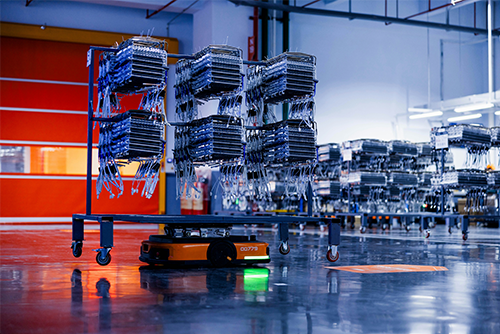
AI and IoT advancements have rapidly transformed industrial automation in Africa. Manufacturing is on an upward trajectory, but could private 5G be the catalyst for the next level of automation and competition?
Industrial Automation in Africa
Tools like demand forecasting, route optimization and predictive maintenance allow industrial and manufacturing industries to streamline responsibilities and maximize profitability. Mordor Intelligence found that Industrial IoT contributed to 46.32% of revenue in the Middle East and Africa in 2024, with AI and analytics driving the highest percentage increase in annual growth rates.
This mass digitization is impressive, but the industry’s successful integration of new technologies is developing rapidly and may not be completely secure or sustainable. To maximize profitability and potential, companies may find the untethered factory of 5G networks to be the best way to maximize technological innovations.
Why Private 5G?
The digital developments of Industry 4.0, which is the fourth-phase industrial revolution that incorporates smart tech, define the current business landscape. Current Wi-Fi and 4G networks support these technologies en masse, but because of how quickly digital developments occur, the systems’ integrity may not hold as securely as needed. Private 5G networks offer superior speed, security and automation to both support and advance these innovations.
Wi-Fi is flexible and accessible, but 5G offers more reliable device connectivity, adaptability for traffic types and even higher cost savings. 5G reliability exceeds 99.999% per year, which is essential for mission-critical applications. Supply chains and e-commerce platforms can operate at a higher capacity, and automation technologies can continue to advance and expand.

Private 5G Applications in Manufacturing and Logistics
5G networks can upgrade smart tools with robotics and real-time process control. For example, manufacturing and logistics industries may use automated guided vehicles (AGVs) and autonomous mobile robots (AMRs). These computerized, self-operating machines are commonly used in warehouses to support tasks like transporting, loading and unloading, and inventory management. Because of their productivity and efficiency enhancements, the market for these bots has grown exponentially since 2023. Based on current trend growth, the AGV market is expected to hit $4.09 billion by 2029.
Modern AGV technologies utilize smart sensors and management software, and AMRs integrate AI and machine learning (ML) to increase operational efficiency. Smart tools like these are essential elements of Industry 4.0, and manufacturing and logistics can maximize the technology even further with 5G network infrastructure. The superior coverage, reliability and low latency that 5G offers can reduce downtime, allowing the machines to provide more support and increase productivity.
Challenges and Strategic Considerations
Mass 5G network integration across Africa faces a few drawbacks, including infrastructure gaps and digital disparities. The continent is diverse, with a range of access to reliable internet connectivity and power.
The South African government launched a Digital Economy Mission Plan to support economic growth. The plan aims to provide digital connectivity with 4G and 5G infrastructure across the country by 2030, but has faced drawbacks like funding issues that have prolonged the process.
Nigeria’s digital economy also greatly relies on strong connectivity, but issues like inconsistent digital transformation infrastructure and policy bottlenecks slow the adoption of the needed network.

African governments can employ digital infrastructure changes in phases to overcome the challenges of mass infrastructure change. Involving local communities in decision-making processes to ensure that more rural areas also have access to secure connectivity can help unify advancement efforts across the continent. Digital literacy and security can bridge gaps between regions to help support a stronger network for everyone. While challenging, working toward a better, more advanced infrastructure is worth the time and effort.
Unlocking Africa’s Industrial Potential
Industry 4.0 brings incredible technological advancements that transform the industrial landscape entirely. With such rapid development, security and sustainable growth should be a top priority to ensure consistent innovation. The untethered factory of 5G networks unlocks new opportunities to support and expand digitization efforts. The African industrial manufacturing sector can optimize and revolutionize productivity and profitability through integration.