By
By 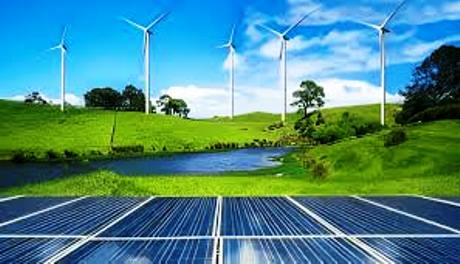
By Alicia Dean, Head of People and Group Services at SOLA Group
The renewable energy sector stepped up when legacy infrastructure was struggling to keep up. Now, this sector is changing the nature of the industry in South Africa on multiple levels. From employment to innovation to global best practice, South Africa’s renewable energy economy is transforming the industry. And yet, when it comes to employment and skills development, the sector continues to grapple with some serious gaps.
RELATED: Global green economy to exceed $7 trillion by 2030, driving growth and premium valuations
The first is permanence. The industry hasn’t fundamentally transformed net job creation with only 6,000 permanent jobs created. The rest are temporary. Many people are working on the initial construction phases of a project, but their skills aren’t translating into long-term roles.
High unemployment rate is affecting how intelligent technologies can be adopted
Another challenge is how the country’s exceptionally high unemployment rate is affecting how intelligent technologies can be adopted – automation and robotics that may make sense in other regions can’t be replicated in South Africa without displacing people who rely on jobs for their livelihoods. There is a constant need to find a delicate balance between the need to evolve and advance, alongside ensuring people aren’t left behind.
This dynamic has created a uniquely South African version of the clean energy transition. The industry continues to modernise, but it does so in a way that supports employment and economic participation. In practice, this has widened the definition of what the renewable energy workforce looks like, bringing a different emphasis to roles and attributes that weren’t essential a decade ago.

Shift towards large-scale renewable energy deployments has increased demand for specialised skills
The move towards large-scale renewable energy deployments has increased the demand for specialised skills, but many of these aren’t entirely new roles. They are extensions of existing roles that have been reimagined by the complexity of modern projects. As more solar and battery plants move from development to operation, there’s a growing need for asset managers, performance analysts, operations and maintenance specialists, and grid engineers – roles that ensure energy plants can operate optimally throughout their lifecycle.
Then, of course, cybersecurity is an important issue. Modern energy plants rely heavily on control and networking technologies that enable remote monitoring and data collection through digital interfaces, and that means protecting these systems is critical. Downtime or disruption can have serious financial and operational consequences.
Cybersecurity training, expertise now associated with renewable energy
Therefore, cybersecurity training and expertise is increasingly associated with renewable energy. At the same time, the volume of data created by these intelligent systems has increased demand for people who can do analytics or data management and who can support day-to-day decision-making. Their insights can fundamentally change how leadership perceives plant performance, operational risks as well as guide preventative and corrective maintenance.
Looking into the future, the introduction of the South African Wholesale Electricity Market (SAWEM) is going to change the demand for talent even more. Energy trading, day-ahead forecasting and financial modelling are already well-established careers in the UK and Europe, but are relatively new locally. South Africa’s move towards a more open electricity market will make these skills increasingly important, presenting an opportunity for skills transfer between the financial services and energy sectors.
Sector attracting professionals wanting to contribute to long-term energy security and climate resilience
The sector is also attracting experienced professionals from mining, oil and other heavy industries who are looking for work that carries more meaning. Many want to contribute to long-term energy security and climate resilience, and renewable energy offers a way to do that. Internal engagement data consistently shows that people working in the sector feel connected to the mission of building a cleaner, more stable future, although this is not their only motivation. The rapid change of pace in the sector is alluring for people who enjoy problem solving and rapid innovation.

Sector must build a long-term talent pipeline
This is where balance is key. The sector needs to build a long-term talent pipeline which recognises all parts of society, creating opportunities for skills development and career growth. Skills development often happens in shorter-term, community-based interventions aligned with project locations and partnerships with universities and TVET colleges.
Internship and vacation-work opportunities help create exposure, but do not yet meet the scale of national demand for specialised renewable energy skills. The construction phases of utility-scale projects continue to offer the greatest volume of short-term employment, while operations and maintenance roles create longer-term, though fewer, opportunities.

Alicia Dean SOLA Group_resized
The sector relies on scarce skills in high-pressure delivery environments, and companies must create workplaces where people can thrive. At SOLA, values are embedded into the performance system so that how work is done carries equal weight to what is delivered. Much of the industry’s strength lies in the mix of deep technical expertise alongside curiosity and the willingness to take on complex challenges.
The clean energy transition is creating new job categories and redefining old ones. It is expanding opportunities while demanding new skills, new mindsets and new forms of collaboration. It also asks that companies prioritise skills development across South Africa because right now, the door is open and there is plenty of opportunity.