By
By 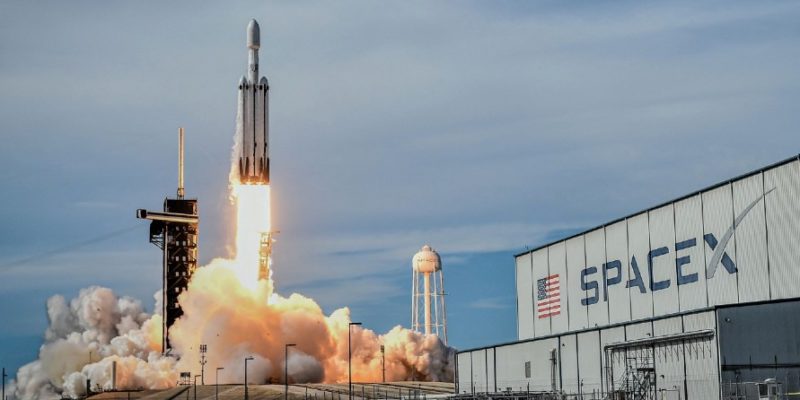
Nasdaq’s accelerated index inclusion rules open door for mega-IPOs to trigger tens of billions in passive reallocations away from Big Tech.
The blockbuster IPOs expected imminently from SpaceX, OpenAI, and Anthropic could weaken the grip the Magnificent Seven—Apple, Microsoft, Nvidia, Amazon, Meta, Alphabet, and Tesla—have held over Wall Street for years, according to Nigel Green, CEO of global financial advisory deVere Group.
RELATED: SpaceX dethrones OpenAI as world’s most valuable unicorn at $1.25 trillion
The comments come as Nasdaq moves to accelerate index inclusion rules for newly listed companies, opening the door for mega-IPOs with relatively small public floats to enter key benchmarks far sooner than under previous standards.


The New Giants: SpaceX, OpenAI, and Anthropic
SpaceX is expected to launch one of the largest IPOs in history, with reports suggesting a valuation that could place it among the world’s most valuable listed companies. Meanwhile, OpenAI has been valued privately at more than 300billion∗∗,andAnthropicatapproximately∗∗100 billion, as investor demand for AI exposure intensifies.
“A New Generation of AI and Space Giants”
Nigel Green says the implications extend well beyond IPO excitement.
“For years, Wall Street’s gains have become increasingly concentrated in a very small group of mega-cap tech companies. The Magnificent Seven have dominated passive inflows, index performance, and investor attention to an extraordinary degree. SpaceX, OpenAI, and Anthropic could begin changing that balance as institutional capital begins shifting toward a new generation of AI and space giants.”
He explains that the emergence of a new wave of mega-cap public companies may force institutional portfolios, index funds, and ETFs to redistribute capital that has remained heavily concentrated in existing tech leaders.
Tens of Billions in Passive Reallocations
“These listings could ultimately trigger many tens of billions of dollars in passive reallocations as major indices absorb the new entrants,” says Nigel Green. “Some of the companies which have led markets higher for years may begin facing structural dilution in index weightings and portfolio allocations.”
He notes that investors have become accustomed to a market environment in which a narrow group of US tech stocks disproportionately drives benchmark returns.
“Markets have been operating with unusually high concentration risk. A relatively small number of companies have accounted for an outsized share of gains across major indices. The arrival of new AI and space leaders could alter the composition of market leadership in a meaningful way.”
A Transformation in Global Capital Markets
The deVere CEO says the development reflects a broader transformation taking place across global capital markets as companies stay private longer, reach enormous scale before listing, and arrive on public exchanges with immediate institutional relevance.
“Traditional IPO rules were built for a different era. They were not designed for companies entering public markets at this scale with dominant AI infrastructure, major data ecosystems, or commercial leadership that’s already established.”
The Passive Investing Amplifier
Nigel Green argues that the growing influence of passive investing is amplifying the importance of index inclusion decisions.
“Passive investing has become one of the most powerful forces shaping modern markets. Once a company enters major benchmarks, enormous pools of institutional capital are effectively required to buy the stock. This creates a self-reinforcing cycle of demand, visibility, and market influence.”
Competition for Finite Investor Capital
He adds that the emergence of SpaceX, OpenAI, and Anthropic as public companies is likely to intensify competition for investor capital within the broader tech sector.

“Investors are unlikely to reduce enthusiasm for AI and tech overall. But capital is finite. The arrival of new market giants inevitably changes how institutional investors allocate resources and manage concentration risk.”
A Shift in Market Leadership
Nigel Green concludes:
“For the first time in years, the companies absorbing the largest passive inflows may no longer be only Nvidia, Microsoft, Amazon, or Meta. SpaceX, OpenAI, and Anthropic are emerging at a scale capable of competing for the same institutional capital that has overwhelmingly concentrated in the Magnificent Seven throughout the AI rally.”