By
By 
By Claudio Coelho, Founder and CEO at Backspace Technologies
Focusing on human metrics will close the digital divide
Here’s the truth about how connectivity is seen broadly: Walk into any boardroom and you will hear comforting numbers. 99.9% uptime and megabits per second north of 100. C-suites might talk about ironclad SLAs.
RELATED: Redefining poverty in Africa: A tech visionary’s journey to bridge the digital divide
On paper this all looks flawless. But consider this: in the real world those numbers mean nothing to a child in an informal settlement who has no access to a fibre line or to a factory worker whose family is stuck on expensive cellular data that runs out before the month does.
If we are honest, the South African connectivity industry has spent years fighting for the same slice of the affluent pie while the majority of the country, people who genuinely need the opportunities that being connected enables, remain priced out, or to put it more bluntly, locked out. We would do well to reframe our focus, to cast our gaze if only for a moment, away from those who have connectivity towards those who have very little or no affordable connectivity at all. It’s about appreciating the gap between KPIs and lived reality.
Are we happy with the status quo?
An obsession with technical metrics is mirrored inside many companies too. Skills shortages – especially in the IT industry – have turned hiring into a desperate scramble. Companies poach skilled technicians from one another at premium rates, only to watch in horror when culture dissipates as new technicians cannot work in teams, cannot adapt to challenging conditions in the lower end of the market, or – plainly put – arrive with the wrong attitude.


Claudio Coelho, Backspace CEO
The status quo presents the same problem at both ends of the value chain. We have a sector that measures the wrong things. For customers, it is measuring uptime percentages as cold data points that ignore whether children can actually access online learning. For talent within businesses, we gravitate towards CVs that show an impressive track record but show nothing about whether someone shows up with grit when theft, load shedding or economic shocks hit.
Breaking out of this status quo isn’t idealistic. On the contrary, this is precisely how Backspace navigated from humble beginnings. We have imperfect conditions in South Africa, everyone knows this. The pandemic magnified this. The lesson is that technical excellence without human resilience is self-defeating.
A human-centred alternative
A handy, and proven way towards growth and success is to focus on human metrics. Redefine success around “human uptime”, not just whether the network is up, but whether it is changing lives. What does this mean? It means that connectivity is reaching informal settlements and other poorer, working communities at prices they can actually afford.
This purpose-led culture is achieved by hiring for attitude first, and then deeply investing in the people who have it. You simply cannot execute on purpose if you hire technically brilliant but toxic team members. This same philosophy scales outward: give communities the tools and incentives to connect themselves. They will.

Turning a human-centric approach into opportunity
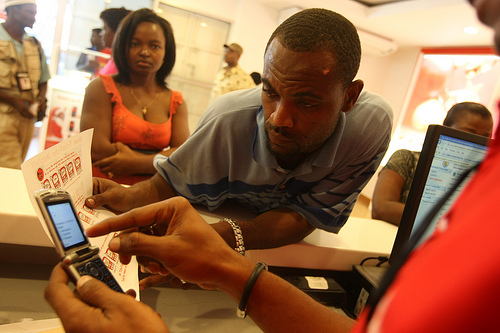
Once you have the right approach to human metrics, both internally and externally, it is far easier to chase opportunity in the face of immense challenges. Take Backspace’s reverse billing model for example, which turns data into something akin to being “toll-free”. Any app, website or payment device can be accessed at no cost to the end user; the supplier of the content or service is back-billed. APN technology locks the device so the SIM cannot be removed or misused, while still allowing the machine to reach its required applications for free. Human metrics: Are people being connected and enabled?
Internally, the same human-centric logic applies. You want creativity and an opportunity mindset to drive innovation. To foster this, it is useful bringing in external coaches with new and different energy, investing in internal training programmes and adopting an open-door policy so that staff members feel their voice can be heard. This kind of culture leads to an environment with high tenure, and one where innovation flows.
South Africa’s connectivity future depends on people, not just percentages
Again, this is not idealistic, it’s been learnt through practice. During the pandemic when everyone was panicking, we went from humble voice-only beginnings to R18-million monthly revenue generated from shipping SIM phones to the informal sector. Without any doubt, focusing on human metrics enables businesses to turn imperfect conditions into opportunity.
The lesson is simple. South Africa’s connectivity future depends on people, not just percentages. Businesses would do well to look at their own metrics. If the definition of uptime stops at network availability, you’re missing out on so much more.
If we’re honest. We don’t need more 99.9% uptime headlines. We need human uptime. The country craves connectivity that actually reaches the people who need it most, delivered by teams who believe making a real difference matters more than any single skill. Organisations that make this shift will be the ones who finally close the digital divide, not just talk about it.