By
By 
By Osasome, C.O
Telecom Industry Records Steady Growth in Q2 2025
National Bureau of Statistics (NBS) says Nigeria’s telecommunications industry sustained a strong performance in the second quarter (Q2) of 2025, with active voice subscriptions rising to 171,730,006.
RELATED: NCC moves to overhaul Nigeria’s 2000 telecom policy as GSM legacy, policy gaps test Africa’s largest market
According to the NBS, this represents a 0.48 per cent year-on-year growth compared to 170,904,257 active voice lines recorded in Q2 2024. The data is contained in the Telecoms Data: Active Voice and Internet, Porting and Tariff Information Report for Q2 2025, released in Abuja on Monday.
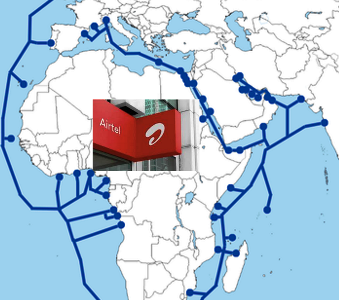
Nigeria’s telecommunications sector stands as one of Africa’s largest and most dynamic markets. It contributes over 14% to the national GDP by 2024 across approximately 171–225 million active lines. Led by MTN, Airtel, Globacom, and 9mobile, the industry is pivoting rapidly from voice to data-centric services. Growth is driven by expanding 5G coverage, rising investment, and surging mobile money adoption.
Telecoms Sector Attracts Strong Foreign Investment Rebound
Beyond subscriber growth, the NBS report highlighted a significant resurgence in foreign direct investment (FDI) into Nigeria’s telecom sector. This is signalling a renewed confidence among global investors after a period of subdued inflows.
FDI into telecoms surged to $208.51 million in Q3 2025, a dramatic increase from $14.74 million recorded in the same quarter of 2024. This represents a 1,314.59 per cent year-on-year jump, marking one of the strongest quarterly rebounds in recent years.
Cumulative FDI Tops $392 Million in Nine Months
Investment trends earlier in 2025 had already pointed to recovery. Capital inflows stood at $80.78 million in Q1 and rose to $103.63 million in Q2, culminating in the sharp Q3 surge.
Between January and September 2025, Nigeria’s telecom sector attracted a cumulative $392.92 million in FDI. It exceeded the $319.72 million recorded in the corresponding period of 2024. This translates to a 22.9 per cent increase, underscoring sustained improvement in foreign investment momentum.
By contrast, telecom investments in 2024 declined sharply after a strong Q1, falling from $191.57 million in Q1 to $113.42 million in Q2. Investments collapsed to $14.74 million in Q3, making the 2025 rebound particularly notable.
Tariff Adjustment Drives Network Investment
Industry analysts attribute the renewed investor interest largely to regulatory reforms. In January 2025, the Nigerian Communications Commission (NCC) approved a 50 per cent tariff adjustment, the first in over 11 years.

According to Dr Aminu Maida, Executive Vice Chairman of the NCC, the adjustment has encouraged telecom operators to commit about $1 billion towards infrastructure upgrades, service expansion, and accelerated deployment of 4G and 5G networks nationwide.
The Association of Telecommunications Companies of Nigeria (ATCON) also confirmed that operators are reinvesting additional revenue into improving network quality, expanding digital access, and enhancing customer experience.
Voice and Internet Subscription Trends
On a quarter-on-quarter basis, the NBS report showed that active voice subscriptions declined slightly by 0.57 per cent, from 172,708,410 in Q1 2025 to 171,730,006 in Q2 2025.
Meanwhile, active internet subscriptions rose to 141,171,679 in Q2 2025, up from 136,497,384 in Q2 2024, representing a 3.42 per cent year-on-year increase. On a quarterly basis, however, internet subscriptions dipped marginally by 0.62 per cent from 142,053,537 in Q1 2025.
State-by-State Subscription Breakdown
The report showed that Lagos State maintained its lead with the highest number of active voice subscribers at 20,469,762, followed by Kano with 11,006,922 and Ogun with 9,759,254.
At the lower end, Bayelsa State recorded the fewest voice subscribers at 1,148,655, followed by Ebonyi (1,633,547) and Ekiti (1,667,558).
In terms of internet usage, Lagos again topped the chart with 17,591,914 active subscribers, followed by Kano (8,896,247) and Ogun (8,458,904). Bayelsa recorded the lowest number of internet users at 1,288,960, alongside Ebonyi and Ekiti.
MTN Retains Market Leadership
The NBS report further showed that MTN maintained its position as Nigeria’s largest telecom operator by subscription share in Q2 2025, reinforcing its dominance in both voice and data segments.
Outlook: A Sector Regaining Momentum
The strong rebound in FDI, combined with steady subscription growth and regulatory reforms, underscores a pivotal phase for Nigeria’s telecom industry. Analysts say sustained policy stability and continued infrastructure investment could position the sector as a key driver of digital transformation and long-term economic growth.