By
By 
Government Caps Equity at 49% as Private Sector Leads Climate-Resilient Digital Infrastructure Drive
Nigeria is set to invest $460 million, about 92 per cent of a $500 million World Bank concessional loan, to capitalise a proposed fibre infrastructure company. This is a new company that will deploy 90,000 kilometres of climate-resilient broadband fibre nationwide.
RELATED: Nigeria faces major setbacks in achieving 70% broadband penetration by 2025 despite $2B fibre optic plan
The funding framework is outlined in the Financing Agreement for the Building Resilient Digital Infrastructure for Growth Project. This is the deal-document between Nigeria and the International Development Association (IDA), the World Bank’s concessional lending arm.
World Bank Backs Nigeria’s Broadband Expansion
Under the agreement, the World Bank approved a $500 million credit facility to accelerate Nigeria’s push to extend high-quality, climate-resilient broadband to unserved and underserved communities.
Of the total, $460 million will be used as equity financing for a newly created Project Company, while the remaining $40 million will cover goods, works, advisory services, training, operating costs and reimbursement of a preparation advance used to structure the project.
New Fibre Company to Operate as Private-Led Joint Venture
According to the agreement, the Project Company will be established as an independent, majority privately owned special-purpose vehicle (SPV) to roll out the fibre network in phases.
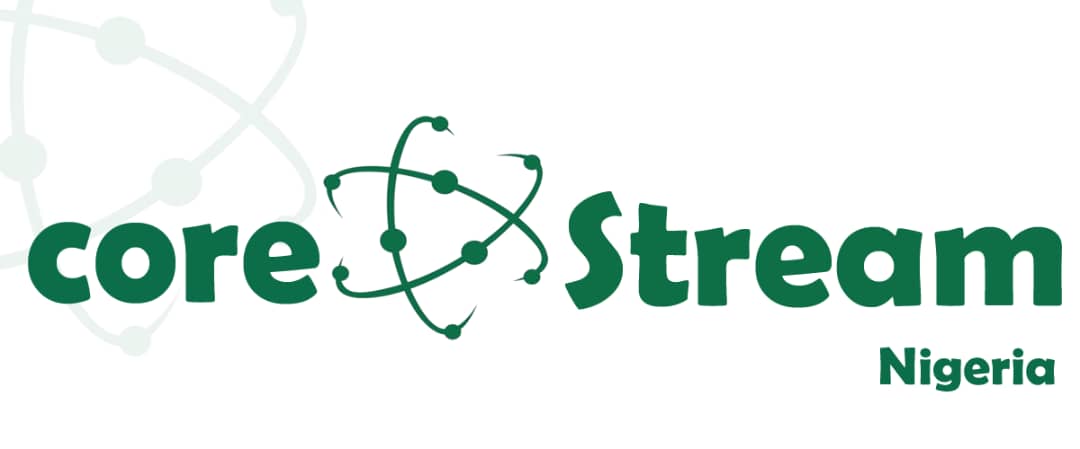
The firm will operate strictly as a wholesale, open-access provider, delivering services to licensed telecom operators rather than retail customers, while also managing associated investments and transaction advisory services.
Although the Federal Government will participate through the Ministry of Finance Incorporated (MOFI), its equity stake will cap at 49 per cent. This is to ensure that private investors retain majority control and operational leadership.
Equity Funding Tied to Performance Milestones
The $460 million equity injection will be released in four tranches, each linked to strict operational benchmarks:
- $150 million upon incorporation of the Project Company and approval of its governance documents
- $100 million after the adoption of World Bank-approved fiduciary procedures and deployment of 5,000km of fibre
- $100 million following completion of an additional 20,000km
- $110 million after the launch of wholesale open-access services and deployment of a further 40,000km, bringing total rollout to at least 65,000km before the final drawdown
Once each tranche is approved, funds must be transferred to the company’s dedicated account within five working days, reinforcing the equity-based nature of the financing.
Oversight by Communications and Finance Ministries
Implementation will be overseen by the Federal Ministry of Communications, Innovation and Digital Economy, while the Ministry of Finance will receive semi-annual progress reports.
A dedicated Project Implementation Unit will manage daily operations, with financial management handled by the Federal Project Financial Management Department in the Office of the Accountant General of the Federation.
Beyond fibre deployment, the project also includes:
- Technical assistance to government agencies
- Support for broadband use in targeted regions
- Environmental and social safeguards
- Independent audits, monitoring and grievance redress mechanisms
Strong Environmental and Social Safeguards
The agreement mandates strict compliance with an Environmental and Social Commitment Plan. It also includes the establishment of accessible grievance mechanisms for affected communities and detailed reporting obligations to the World Bank.
Long-Term, Concessional Repayment Structure
Repayment of the credit will begin in October 2030, with Nigeria repaying 2.5 per cent of the principal every six months until April 2050. The loan attracts a concessional interest charge based on the reference rate plus a variable spread, minus 250 basis points.
Part of Nigeria’s $2bn Digital Backbone Vision
The fibre rollout aligns with the Federal Government’s broader ambition to build one of the largest digital backbones in the developing world.
In August 2025, the Minister of Communications, Innovation and Digital Economy, Bosun Tijani, unveiled the technical design for Project BRIDGE. The $2 billion fibre-optic expansion initiative will extend Nigeria’s broadband network from 35,000km to over 125,000km.
The plan includes:
- Seven national fibre rings linking the six geopolitical zones with Lagos
- 37 city-level fibre loops
- 77 regional networks
- Multiple edge data centres
“Over the past two years, we have worked tirelessly on what is arguably the most ambitious and foundational digital infrastructure project in Nigeria’s history,” Tijani said, describing Project BRIDGE as central to unlocking the value of Nigeria’s eight submarine cables.
World Bank Remains Nigeria’s Largest Creditor
The fibre project adds to Nigeria’s expanding portfolio of World Bank-supported programmes. As of June 30, 2025, Nigeria’s external debt stood at $46.98 billion, according to the Debt Management Office.
The World Bank Group remains the country’s largest single creditor, accounting for $19.39 billion. This is about 41.3 per cent of total external debt, underscoring its dominant role in financing Nigeria’s development agenda.