By
By 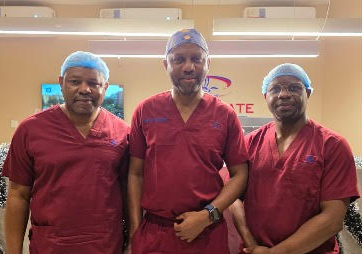
Lagos Procedure Signals New Era of Precision Medicine and Advanced Healthcare
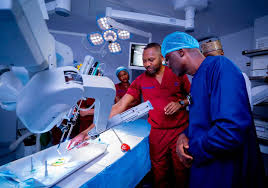
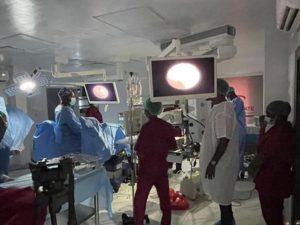
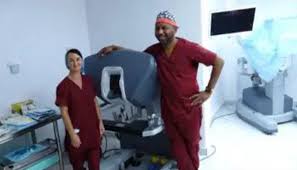
Nigeria has recorded a landmark achievement in medical innovation with the successful completion of West Africa’s first robotic-assisted gynaecological surgery. This achievement positions the country at the forefront of advanced healthcare delivery in the sub-region.
RELATED: Zain Omantel International powers Guinness World Record remote robotic surgery across 12,000km
The historic procedure was performed in January 2026 at The Prostate Clinic (TPC), Lagos. This multidisciplinary surgical team was led by Professor Kingsley Ekwueme, Consultant Robotic Surgeon and Medical Director of the clinic.
Experts say the development marks Nigeria’s decisive transition from traditional open surgery to minimally invasive, precision-driven robotic medicine, expanding access to world-class surgical care within the country.
From Male-Focused Robotics to Women’s Health
Originally introduced for male urological procedures, robotic surgery at TPC has now been successfully extended to women’s health. It marks a major milestone in gynaecological care.
Professor Ekwueme described the surgery as part of TPC’s long-standing commitment to innovation.
“Following our tradition of leading medical innovation, we introduced the first surgical robot in West Africa last year. Today, we are proud to extend this innovation to women’s surgeries,” he said.
The patient, a young woman diagnosed with an ovarian tumour, underwent robotic-assisted surgery that enabled surgeons to remove two large tumours with minimal blood loss and rapid recovery.
“She will go home today and return to work tomorrow,” Ekwueme added.
Why Robotic Surgery Is Transforming Patient Outcomes
According to Prof. Ekwueme, robotic-assisted procedures significantly reduce the risks and recovery challenges associated with open surgery.
Key benefits include:
- Minimal postoperative pain
- Reduced blood loss
- Lower risk of infection
- Shorter hospital stays
- Faster return to daily activities
“Within six hours, once vital signs are stable, the patient can eat and go home. Recovery is fast, blood loss is minimal, and vital functions are preserved,” he explained.
The technology is particularly transformative for treating uterine fibroids, endometriosis, ovarian tumours, and selected cases of ectopic pregnancy.

CSR-Driven Care and Strategic Expansion
Ekwueme disclosed that the procedure was provided free of charge under TPC’s corporate social responsibility (CSR) initiative, noting that prolonged illness often results in greater economic losses than the cost of advanced treatment.
He also announced a partnership with the Imo State Government to establish Nigeria’s first dedicated robotic surgery centre, describing the move as the beginning of a national healthcare revolution.
“This revolution has just started. Nigeria can become a hub for advanced medical care, training and research,” he said.
Expert Validation from Local and International Specialists
A Consultant Gynaecologist at the Lagos State University Teaching Hospital (LASUTH), Professor Yusuf Oshodi, confirmed that the 30-year-old patient was carefully assessed and found suitable for robotic surgery.
“The tumour is benign, and robotic precision allows removal of affected tissue without compromising fertility,” Oshodi said.
He noted that many Nigerian women suffer silently from gynaecological conditions such as fibroids, endometriosis and abnormal menstrual bleeding, with fibroids affecting up to 70 per cent of women in some communities, although only 10–20 per cent develop severe symptoms.
Delayed treatment, he warned, can lead to complications including anaemia and impaired heart function.
UK-based Consultant Gynaecologist Mr Olaolu Aladade also praised the breakthrough, highlighting robotic surgery’s superiority over open procedures.
“With open surgery, complications and recovery time are higher. Robotic surgery allows faster recovery, earlier return to work, and better psychological and economic outcomes,” he said.
What This Breakthrough Means for Nigeria’s Healthcare System
1. Superior Surgical Precision and Fertility Preservation
Robotic systems provide 3D high-definition visualisation and wristed instruments that surpass the dexterity of human hands, enabling surgeons to remove tumours while protecting surrounding organs and preserving fertility.
2. Regional Leadership in Advanced Medicine
With regulatory approval from NAFDAC for the Toumai robotic surgical system, Nigeria becomes the first country in West Africa to clear robotic surgery for full clinical use, reducing dependence on overseas medical tourism.
3. Local Capacity Building and Diaspora Collaboration
The initiative includes structured training for Nigerian surgeons, nurses and biomedical engineers, supported by collaboration with medical experts in the diaspora to ensure sustainable skills transfer.
4. Long-Term Economic and Social Impact
While initially capital-intensive, robotic surgery is expected to become more cost-effective over time due to reduced hospital stays, fewer complications and improved productivity for patients.
A New Era of Surgical Innovation
The successful introduction of robotic gynaecological surgery marks the dawn of a new era of surgical innovation in Nigeria, delivering world-class, precision-based healthcare to local patients and reinforcing the country’s growing reputation as a centre for advanced medical excellence in Africa.