By
By 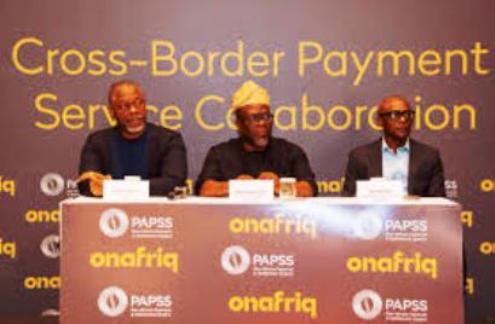
Nigeria Pilots Wallet-Based Cross-Border Payments to Ghana
Nigeria has commenced a pilot of its first wallet-based outbound cross-border payment corridor, enabling users to send money instantly to Ghana in Naira. The initiative is designed to reduce dependence on hard currencies. It will greatly lower transaction costs, and ease trade frictions for small businesses across West Africa.
RELATED: Africa’s long walk to financial freedom: Why PAPSS and PAPSSCARD matter more than ever
The pilot is being delivered by Onafriq Nigeria Payments Ltd in partnership with the Pan-African Payment and Settlement System (PAPSS), marking Africa’s first wallet-based outbound payments corridor from Nigeria to Ghana.
Naira-Denominated Transfers Approved by CBN
The new corridor allows instant cross-border payments fully denominated in Naira, eliminating the need for foreign currency conversion. Delivered in collaboration with banks and mobile money operators, the service has received regulatory approval from the Central Bank of Nigeria (CBN).
The pilot will run for an initial six-month period starting December 1, focusing on real-time settlement and affordability for users.
Boosting SMEs and Intra-African Trade
The initiative is targeted at individuals, merchants, and traders, with a strong emphasis on small and medium-sized enterprises (SMEs), which account for the bulk of intra-African trade.

By offering faster, cheaper, and more transparent cross-border payments, the service aims to expand market access for Nigerian and Ghanaian businesses while reducing long-standing barriers to regional commerce.
How the Nigeria–Ghana Payments Corridor Works
The system leverages Onafriq’s mobile money infrastructure, which connects over one billion mobile wallets, integrated with the PAPSS banking network of more than 160 commercial banks.
Under the pilot framework:
- Nigerian users send funds in Naira
- Ghanaian recipients receive funds in Cedi
- Settlement times are reduced to under 120 seconds
This bi-directional corridor builds on a successful Ghana-to-Nigeria pilot launched in late 2025. It creates a closed-loop digital bridge between the two largest economies in the West African Monetary Zone (WAMZ).
Addressing High Costs of African Cross-Border Payments
Historically, cross-border transfers in Africa have been costly and slow, with fees ranging from 7% to over 12%. This is far above the G20’s target of 3% by 2027. Transactions often required routing through intermediary banks in Europe or North America, taking three to seven business days.
The PAPSS-enabled local-currency settlement system eliminates these inefficiencies, significantly cutting costs and delays for businesses and consumers.
Supporting Non-Oil Exports and Formalising Trade
The economic impact for Nigeria is expected to include growth in non-oil exports and the formalisation of informal trade. In 2024, Nigeria exported about $139 million worth of goods to Ghana, while Ghana’s exports to Nigeria stood at $52.8 million.
However, a significant share of West African trade remains informal due to banking constraints. By introducing a “Naira-first” digital payment rail, the CBN and Onafriq aim to capture more of this informal trade volume and provide SMEs with a transparent platform for regional expansion.
Strengthening AfCFTA Through Digital Payments
The partnership also advances the implementation of the African Continental Free Trade Area (AfCFTA), which seeks to promote tariff-free trade across 54 African countries.
Under the collaboration:
- Onafriq provides mobile money connectivity across more than one billion wallets
- PAPSS contributes access to over 160 banks and 400 million bank accounts in 19 African countries
Together, they are bridging the gap between mobile money and traditional banking ecosystems.
Making Africa’s Borders Invisible to Payments
Speaking on the initiative, Ositadimma Ugwu, Chief Information Officer at PAPSS, said the project redefines how Africans perceive borders.
“Too often, African businesses and individuals see borders as roadblocks instead of opportunities. With this step, we’re making it as easy to send value across borders as sending a text message,” he said.
Mxolisi Msutwana, Managing Director for Anglophone West Africa at Onafriq, added that the collaboration demonstrates how scale and interoperability can transform Africa’s payments landscape.
A Foundation for Continental-Scale Interoperability
By connecting bank-led and mobile-led payment ecosystems, Onafriq and PAPSS are addressing one of Africa’s most persistent financial infrastructure challenges.
The Nigeria-to-Ghana outbound payments corridor represents a practical step toward continent-wide, local-currency payments interoperability.