By
By 
Olusegun Oruame | Matters eRising
The Election That May Be Won Before Ballots Are Cast
Nigeria is inching toward 2027 with a familiar tension. But beneath the surface, something radically different is unfolding. This election may not be decided by the loudest rallies.The angriest social media trends. Or even the most dramatic defections. It may be decided quietly, patiently, through data.
RELATED: 2027 Elections: Senate’s u-turn on electronic results transmission fuels trust deficit, tech fears and national anxiety
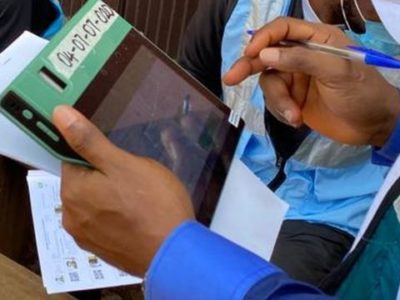
For the first time in Nigeria’s electoral history, citizens are not just voters; they are datasets. Their fears, faiths, silences, frustrations, and hopes are being mapped, modelled, and interpreted months, perhaps years, before Election Day.
And that changes everything.
Why 2027 Is Different
Surveys already suggest a paradox: high voter intent alongside deep anxiety. Nigerians want to vote, but many remain afraid of violence, of manipulation, of wasted hope. Trust in institutions such as Independent National Electoral Commission is improving but still fragile, while economic pressure and insecurity shape voter psychology in unprecedented ways.

This is not an election of blind loyalty. It is an election of calculation.
And political actors know it.
From Assumptions to Analytics
For decades, Nigerian elections relied on myths:
- The North votes as one
- Incumbency guarantees victory
- Religion overrides economics
The 2023 election shattered many of these assumptions. What happened in Lagos was not an accident. It was a warning.
Since then, parties, especially the ruling All Progressives Congress, have reportedly begun rethinking voter engagement from first principles:
Who doesn’t vote—and why?
Which communities feel invisible?
What persuades a silent voter to become an active one?

These questions are not ideological. They are empirical. With a data-driven chairman at the helm, the APC under Prof. Nentawe Yilwatda is betting on empirical evidence to deliver electoral wins.
APC’s Strategic Reboot After 2023
The 2023 election was a shock to old certainties. Lagos, in particular, shattered the myth of untouchable political bases. It taught a hard lesson: numbers can turn against you if you stop listening.
Since then, the ruling APC has reportedly moved away from campaign theatrics toward granular voter intelligence. The APC has been identifying non-voting blocs, tracking voter registration patterns, and re-engaging communities previously taken for granted.
This work is not loud. It is patient. And it reportedly began as early as 2025.
The Quiet Power of Non-Voters
Nigeria’s greatest electoral force may not be swing voters. It may be non-voters.
Millions of Nigerians have stayed away from polling units not because they are apathetic, but because they believe nothing changes. Others have voted under coercion, fear, or inherited loyalty. These groups exist across all six geopolitical zones, embedded in religious, cultural, and historical institutions.
When these citizens are identified, understood, and engaged, they stop being abstractions. They become numbers. And numbers win elections.
North-Central, the Middle Belt, and the End of Electoral Certainties
The North-Central (Middle Belt) has emerged as one of the most analytically important regions heading into 2027. It is religiously mixed, politically restless, and historically underestimated.
Unlike the so-called “core North,” its voters are less predictable and more responsive to inclusion, performance, and presence. This makes the region a testing ground for data-driven politics. The Middle Belt is where messaging, mobilisation, and turnout strategy must be precise, not generic.
Marginal Christian communities across northern states now sit at the centre of electoral modelling. Not as afterthoughts but as potential swing variables.
Opposition Signals and the Battle for Narrative
The African Democratic Congress (ADC) has gained attention as a vehicle for discontent, particularly among groups who feel alienated by traditional power structures. Its rhetoric of inclusion and coalition-building resonates in an election cycle shaped by economic fatigue.
But elections are not won by soundbites alone. Mobilisation capacity, voter conversion, and turnout efficiency matter more than viral statements. This is where data separates ambition from outcome. The David Mark–led ADC faces a defining test. It must master the science of voter data conversion into electoral advantage. Or march into Nigeria’s fast-changing political battlefield armed with anachronistic strategies. In such a contest, the ending is not in doubt.
Leadership, Perception, and the Tinubu Factor
President Bola Ahmed Tinubu enters the 2027 cycle with mixed public sentiment. There is economic strain on one hand, and institutional consolidation on the other. His political history suggests an instinct for long games rather than quick wins.
What matters now is not personality cults but how performance data, demographic engagement, and voter confidence intersect. Economic recovery, however uneven, combined with targeted engagement could reshape perceptions in ways traditional punditry may miss.
The Election Beyond Religion
The “Muslim-Muslim ticket” debate that dominated 2023 is evolving. For many voters, lived reality is now outweighing abstract fears. As one voter in southern Kaduna put it: “Culture and survival now speak louder than religion.”
This shift does not eliminate identity politics. It complicates it. And complexity favours those who understand data.
Lessons From 1993—and Why They Still Matter
The victory of MKO Abiola and Babagana Kingibe in 1993 showed that Nigerian voters can transcend identity when trust, emotion, and timing align. That election was not won by religious arithmetic, but by mass appeal and shared grievance.
The lesson for 2027 is simple: voters are not algorithms. But they leave patterns.
What 2027 May Ultimately Teach Nigeria
Nigeria’s 2027 election could mark the demystification of old electoral thinking.
Not every vote is emotional.
Not every region is monolithic.
Not every loud movement translates to turnout.
Data: clean, granular, human data, may become the most decisive political currency of the republic.
When the results finally arrive, many Nigerians may be shocked. Not because of who wins. But because the real campaign may have happened long before the noise began.