By
By 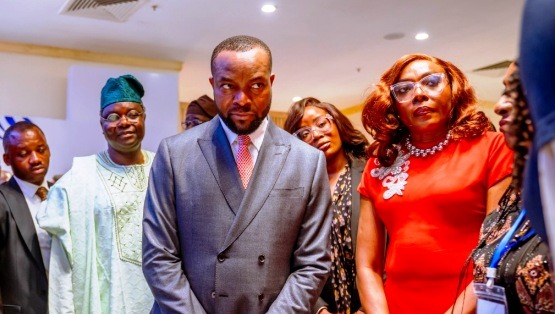
By Osasome C.O
FG Sets Timeline for NIGCOMSAT-2A and 2B Launch
Nigeria has fixed 2028 and 2029 for the launch of two new communication satellites, NIGCOMSAT-2A and NIGCOMSAT-2B. The move aimed at strengthening national security, intelligence gathering, and digital connectivity across Nigeria and the West African sub-region.
RELATED: NIGCOMSAT at 20: Revenue doubles as Nigeria’s space agency hosts NSATWK 2026 and expands global influence
This announcement comes amid a remarkable turnaround at Nigerian Communications Satellite Limited (NIGCOMSAT). The satellite company has recorded strong financial recovery in the last two years despite longstanding institutional and operational headwinds.
Satellite Projects Move into Execution Phase
Speaking at the Second Nigerian Satellite Week in Abuja, the Managing Director of NIGCOMSAT, Jane Nkechi Egerton-Idehen, disclosed that both satellite projects have progressed beyond procurement into financing and implementation.
“For 2A and 2B, we have closed the tender process and moved fully into financing and execution. NIGCOMSAT-2A is scheduled for launch in 2028, while 2B will follow in 2029,” she said.
According to her, the satellites are designed to significantly enhance surveillance, intelligence operations, broadband access, and cross-border connectivity, especially in support of Nigeria’s security architecture.
A Dramatic Financial Turnaround in Less Than Three Years
Egerton-Idehen highlighted what she described as a new growth phase for Nigeria’s space programme, driven by stronger institutional capacity, clearer commercial strategy, and expanding partnerships.

Egertin-Idehen introduces NICOMSAT pioneer MD Ahmed Rufai to a guest
Under the current management, NIGCOMSAT’s revenue reportedly grew from about $650 million in 2023 to over $2 billion in 2025. This marks a dramatic reversal for an organisation that had suffered years of losses, weak governance, and was previously considered for privatisation.
The growth surge, Egerton-Idehen said, was fueled by targeted reforms, renewed commercial focus, fresh service agreements, and rising demand for satellite broadband services across Africa.
Overcoming Years of Structural and Governance Challenges
NIGCOMSAT’s recent performance is particularly notable given its troubled past. For years, the company grappled with financial mismanagement, underutilisation of assets, and governance concerns. Others include allegations of contractual and insurance irregularities under previous leadership.
Despite possessing capacity to serve Nigeria and the wider West African market, patronage remained low for years. Many public and private institutions were forced to rely on foreign satellite operators. Debt obligations, technical setbacks, and operational risks further constrained growth.
Egerton-Idehen acknowledged these legacy challenges. But she stressed that the organisation has now adopted a business-driven, accountability-focused, and profit-oriented model, restoring confidence among partners and stakeholders.
Minister: Satellites Central to Nigeria’s Digital Future
Also speaking at the event, the Minister of Communications, Innovation and Digital Economy, Bosun Tijani, described Nigeria’s satellite infrastructure as a strategic pillar of the country’s digital future.
“Nigeria is the only country in West Africa with its own satellite. NIGCOMSAT provides critical connectivity and resilience, not just for Nigeria but for the entire region,” he said.
He revealed that President Bola Ahmed Tinubu approved the acquisition of NIGCOMSAT-2A and 2B to deepen Nigeria’s space and digital capabilities. But he emphasied that impact, not infrastructure alone, remains the ultimate goal.
“What truly matters is how we deploy this technology to transform agriculture, education, security, and business,” Tijani added.
Broader Digital Investments and Regional Reach
The Minister outlined complementary government investments. They include nationwide fibre-optic expansion, telecom towers in underserved communities, and digital research funding. Equally significant is satellite connectivity extending into neighbouring countries such as Cameroon, Niger, Chad, Burkina Faso, and Benin Republic.
Egerton-Idehen further disclosed that:
- Nigeria has launched seven space assets in just over two decades
- Over 500 young Nigerians were trained in satellite technology in the past year
- More than 50 startups have benefited from NIGCOMSAT’s accelerator programme
- The space agenda is shifting from prestige projects to measurable economic and social outcomes
Nigerian Satellite Week as a Collaboration Hub
The Nigerian Satellite Week continues to serve as a strategic platform for collaboration among government institutions, startups, and academia. The event particualy highlights synergy with private sector players to reinforce Nigeria’s ambition to lead Africa’s digital and space economy.
With new satellites on the horizon and financial performance stabilised, NIGCOMSAT’s recent progress signals a renewed trajectory. It is one defined by reform, resilience, and results under its current leadership.