By
By 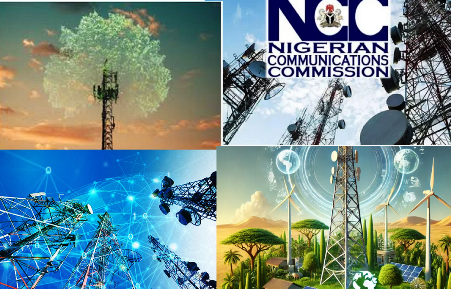
NCC Sets Sustainability Agenda for Telecom Sector
The Nigerian Communications Commission (NCC) has underscored the critical role of the telecommunications sector in shaping Nigeria’s climate-resilient and low-carbon future. Speaking at the Green Conference 2026 in Lagos, the Executive Vice Chairman and Chief Executive Officer of the NCC, Aminu Maida, said the industry must balance rapid connectivity expansion with environmental sustainability.
RELATED: Soros Economic Development Fund invests $7m in Persistent Climate Fund to scale Africa’s green economy
He noted that as Nigeria accelerates its digital transformation, the telecom sector is increasingly central to both economic growth and climate action.
Telecoms Powering Nigeria’s Digital Economy
Nigeria’s telecommunications industry remains one of the country’s strongest economic pillars, connecting over 200 million mobile lines and supporting digital services across banking, education, healthcare, governance, and commerce.
However, the sector is also undergoing a major transition—from a diesel-intensive, high-carbon operating model to a greener, more sustainable digital infrastructure.
According to Dr. Maida, this shift is being driven by the NCC’s Green Telecoms Initiative, which aligns industry operations with Nigeria’s commitment to achieving net-zero carbon emissions by 2060.

Key Pillars of the Green Telecoms Transition
Renewable Energy Adoption
Diesel currently accounts for up to 60% of operating expenses for telecom tower companies, prompting operators to accelerate solar and hybrid energy solutions.
- MTN Nigeria is pursuing Net Zero by 2040 through its “Project Zero” initiative and has secured approvals for captive solar power generation.
- Airtel Nigeria is transitioning over 15,000 base stations to hybrid and solar-powered systems to cut fuel costs and emissions.
Infrastructure Sharing
The NCC is promoting infrastructure colocation, allowing multiple operators to share telecom towers. This approach reduces the number of active sites, lowers operating costs, and significantly cuts the sector’s collective carbon footprint.
ESG and Regulatory Reforms
New regulatory measures are strengthening Environmental, Social, and Governance (ESG) compliance. The NCC is also reviewing long-standing Right-of-Way (RoW) frameworks to reduce fees and encourage the rollout of energy-efficient fibre networks instead of carbon-intensive microwave and satellite links.
E-Waste Management
As the world’s seventh-largest mobile phone market, Nigeria faces a growing electronic waste challenge. The NCC is supporting initiatives focused on responsible recycling and disposal of telecom and digital equipment to prevent environmental harm.
Economic and Environmental Benefits
Green energy adoption in the telecom sector is projected to deliver substantial economic and social gains:
- Cost Efficiency: Renewable energy could reduce operating costs by 30% to 50%.
- Rural Connectivity: Solar-powered towers and renewable mini-grids are extending coverage to underserved communities beyond the national grid.
- Digital Decarbonisation: Expanded digital services reduce travel-related emissions across sectors such as banking, education, and public services.
Challenges Slowing the Transition
Despite the momentum, significant obstacles remain:
- High Capital Requirements: Nigeria operates over 42,000 base stations, yet only about 20% currently use solar energy.
- Macroeconomic Pressures: Inflation and naira depreciation have sharply increased equipment and operating costs.
- Infrastructure Security: Vandalism and theft of solar panels and batteries at remote sites continue to undermine green investments.
Telecoms as an Enabler of Climate Solutions
Dr. Maida noted that the sector’s challenge is not only expanding connectivity, but doing so sustainably. As energy demand rises from towers, fibre networks, and data systems, the industry must embrace:
- Energy-efficient infrastructure
- Wider adoption of renewable power
- Sustainable network expansion models
- Digital technologies that support climate resilience
He emphasised that telecommunications is not just part of the climate problem, but a powerful enabler of solutions—supporting smart energy systems, environmental monitoring, precision agriculture, and climate finance platforms.
“Our responsibility as regulators is not only to promote connectivity and innovation, but to ensure the sector evolves in a way that supports environmental sustainability,” Maida said.
A Greener Future for Connectivity
As Nigeria deepens its digital economy, the future of telecommunications will be defined not only by faster networks and broader coverage, but also by sustainability.
The NCC’s green agenda positions the telecom sector as a cornerstone of Nigeria’s climate strategy. The aim is to get the sector to drive inclusive growth while reducing environmental impact.