By
By 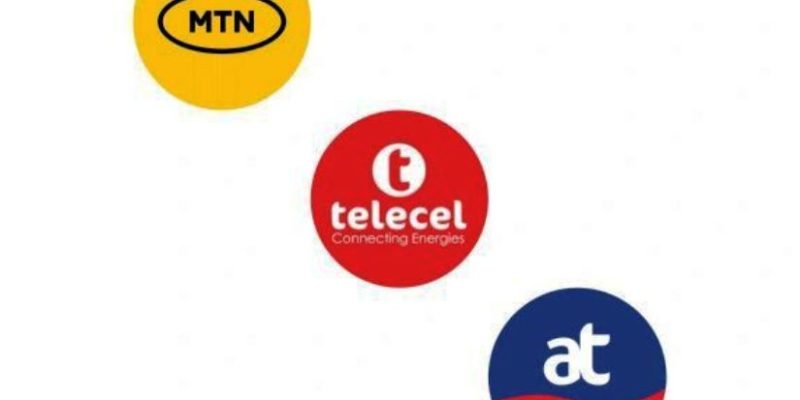
From a telecommunications infrastructure and market-regulation perspective, the massive reinvestment by MTN Group is a double-edged sword for Ghana’s digital economy.
RELATED: MTN Group commits $1.1bn to accelerate 4G, 5G and digital transformation in Ghana
My humble take are as follows:
The Capex Advantage:
MTN’s $1 Billion Commitment
MTN’s pledge to reinvest $1 billion over the next 36 months is a significant commitment to Capital Expenditure (CAPEX).
This capital is likely earmarked for:

- 5G Rollout and Spectrum Optimization
- Scaling next-gen connectivity to meet the data explosion.
Rural Telephony Projects:
Expanding the footprint where Average Revenue Per User (ARPU) is lower but coverage is a regulatory mandate.
FinTech Ecosystems:
Strengthening the MoMo (Mobile Money) backend, which currently serves as the backbone of Ghana’s financial inclusion.
While this influx of FDI (Foreign Direct Investment) is positive for the National Communications Authority’s (NCA) connectivity targets, it further entrenches MTN’s Significant Market Power (SMP) status.
The Duopoly Trap and Competitive Erosion
The concern regarding the “two failing telcos” (referring to the struggles of AT—formerly AirtelTigo—and Telecel) is mathematically sound.
In a healthy telecom sector, a Herfindahl-Hirschman Index (HHI)—a measure of market concentration—should indicate a competitive balance.
Currently, Ghana’s market is heavily skewed:

Network Effect Dominance:
MTN’s massive subscriber base creates a “club effect, “making it difficult for smaller players to churn users due to high off-net costs and ecosystem lock-in.
The Investment Gap:
If AT and Telecel cannot match a fraction of MTN’s $1B CAPEX, which they cannot.
The quality of service (QoS) gap will widen, leading to further subscriber migration and a potential de facto monopoly.
To ensure the long-term health of the Digital Innovation sector, the Ministry of Communications and the NCA must move beyond passive regulation:
Infrastructure Sharing (Open Access): Mandate active and passive infrastructure sharing.
If the smaller telcos can roam on MTN’s superior 4G/5G grid at regulated, fair-value wholesale rates, they can compete on service rather than towers.
Asymmetric Regulation: Continue applying stricter regulatory levers on the SMP (MTN) regarding tariffs and floor prices to give the “underdogs” a fighting chance to gain market share which the then Minister of Communication, Madam Ursula Owusu tried to institutionalise.
Spectrum Pricing Reform:
The Ministry should consider incentivized spectrum pricing for the smaller operators to encourage them to upgrade their legacy 3G networks.
While we welcome MTN’s billion-dollar vote of confidence in Ghana, a monocultural telecom landscape stifles innovation and creates a single point of failure for the nation’s digital economy.
For Ghana to thrive, we need a “level playing field” where competition—not just investment—drives down costs for the end-user.