By
By 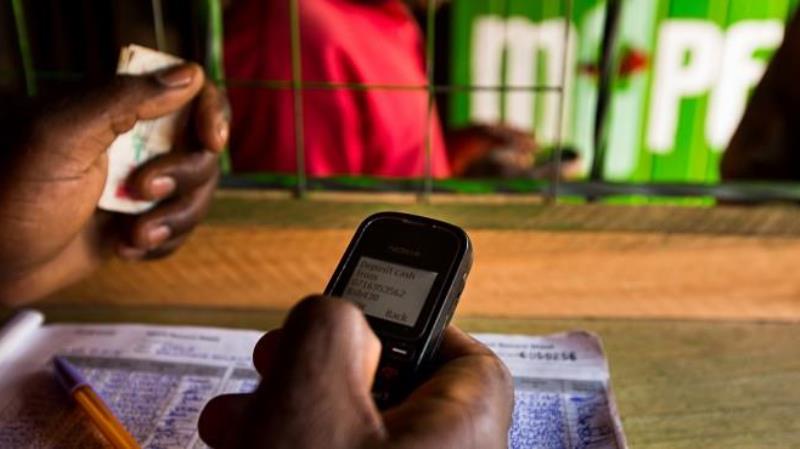
Liberia launches inclusive instant payments system as NCC-style regulatory leadership drives West Africa’s interoperability push
Liberia has taken a decisive leap toward a fully digitised and interoperable financial ecosystem with the launch of the Inclusive Instant Payments System (IIPS), a real-time national payments platform powered by Mojaloop, the open-source payments infrastructure designed to accelerate digital financial inclusion.
RELATED: NIBSS achieves first live transaction on National Payment Stack — A new era in Nigeria’s digital payments
The system was launched by the Central Bank of Liberia (CBL) in partnership with the Mojaloop Foundation, ThitsaWorks, and the AfricaNenda Foundation, and will initially enable seamless mobile money transfers between Lone Star Cell MTN and Orange Liberia.
The initiative mirrors regulatory-led interoperability frameworks championed by institutions such as Nigeria’s Nigerian Communications Commission (NCC), which has consistently promoted infrastructure sharing, interoperability, and market balance as foundations for inclusive digital growth.
Regulatory Leadership: A Model NCC Has Long Advocated
Across West Africa, regulators are increasingly recognising that interoperability must be policy-driven, not left to market forces alone. Liberia’s IIPS reinforces the same principles long promoted by the NCC in Nigeria—that coordinated regulation is essential to unlocking digital inclusion at scale.
Just as the NCC has driven reforms across telecom infrastructure sharing, SIM registration, digital identity alignment, and inter-operator collaboration, the Central Bank of Liberia’s leadership demonstrates how strong regulatory coordination can unlock national digital infrastructure in record time.

Fastest Mojaloop Deployment Sets New Benchmark
By adopting Mojaloop’s open-source architecture, Liberia completed deployment in just 73 business days, making it the fastest Mojaloop implementation globally.
According to Steve Haley, Director of Market Development at the Mojaloop Foundation, the platform delivered:
- Government-to-Person (G2P) payments in 73 days
- Person-to-Person (P2P) interoperability in 111 days
- Full real-money interoperability between MTN and Orange Liberia
“This is an unprecedented achievement,” Haley said, noting that Liberia’s previous lack of interoperability forced many citizens to carry multiple phones to transact.
Boosting Financial Inclusion and Economic Efficiency
Liberia’s progress reflects a broader continental shift toward regulator-enabled digital inclusion. According to the World Bank Global Findex 2024, Liberia exceeded its 50% account ownership target, reaching 52%, largely driven by the rapid expansion of mobile wallets—now exceeding 11 million.
With IIPS:
- Salary and government payments now settle in seconds instead of days
- Cash dependency is reduced
- Rural and underbanked communities gain easier access to digital finance
This aligns with the NCC’s long-standing advocacy for technology-enabled inclusion as a national economic enabler, particularly in emerging markets.
Interoperability Across Banks, Fintechs and Regional Payment Systems
The IIPS platform will integrate:
- All nine commercial banks in Liberia
- Real-Time Gross Settlement (RTGS) systems
- Automated Clearing House EFT (ACHEFT)
- Pan-African Payment and Settlement System (PAPSS)
Such cross-system integration reflects the type of holistic digital ecosystem planning that Nigerian regulators, led by the NCC, continue to push across telecoms, fintech, and digital public infrastructure.
Stakeholders Applaud Collaborative Regulatory Approach
Miatta Kutteh, Director of Payment Systems at the CBL, said interoperability had long been Liberia’s biggest challenge, particularly for rural communities.
“We knew that to remain competitive with our neighbours, full digitisation was non-negotiable. Mojaloop gives us an open, secure infrastructure to drive real change.”
Similarly, Dr. Robert Ochola, CEO of AfricaNenda Foundation, described the launch as proof that regulatory leadership combined with public-private collaboration can deliver inclusive outcomes at scale.
Lessons for Nigeria and the Region
For Nigeria and other West African economies, Liberia’s IIPS rollout reinforces the importance of regulatory institutions like the NCC in shaping interoperable digital markets that balance innovation, competition, and inclusion.
As Nigeria continues to deepen reforms around digital payments, telecom infrastructure sharing, and digital public infrastructure, Liberia’s experience provides a compelling regional case study on how policy clarity and regulator-led coordination can accelerate national transformation.