By
By 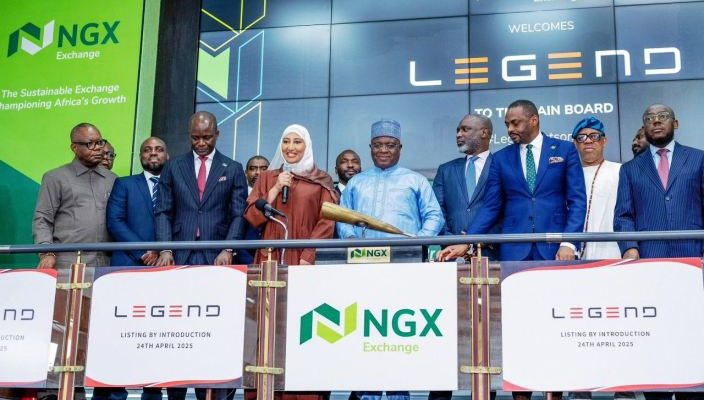
₦80bn Deal Signals Major Consolidation in Nigeria’s Internet Market
Legend Internet Plc is set to merge with Spectranet Limited in a landmark transaction aimed at strengthening Nigeria’s broadband infrastructure and reshaping competition in the country’s fast-evolving internet services market.
RELATED: NCC’s approval of new ISPs raises competition stakes, deepens survival fears for Nigeria’s smaller broadband operators
Announced in March 2026, the proposed merger is expected to be completed by Q2 2026. It will create Nigeria’s largest Internet Service Provider (ISP), with an estimated valuation of ₦80 billion. The combined entity is positioning itself as a next-generation broadband provider. It will focus on scale, quality of service, and long-term financial resilience.
ALSO READ: NCC licenses Amazon Project Kuiper, BeetleSat, Satelio IoT to boost satellite broadband competition in Nigeria
Regulatory Approvals and Transaction Timeline
The transaction received board and shareholder approval from Legend Internet in late 2025. It is currently awaiting final regulatory clearance from the Nigerian Communications Commission (NCC) and the Federal Competition and Consumer Protection Commission (FCCPC).
Once approved, both companies will be integrated under a single corporate structure designed to drive operational efficiencies. As one company, it will expand broadband penetration, and improve service reliability nationwide.
Strategic Rationale: Scale, Infrastructure and Competition
The merger brings together Legend Internet’s fibre-to-the-home (FTTH) infrastructure and listed-company status with Spectranet’s extensive 4G LTE and wireless broadband assets and large subscriber base.
According to industry disclosures, the strategic objective is to counter rising operational costs, improve network capacity in urban markets. The merger positions the new firm to compete more effectively against dominant telecom operators such as MTN and Airtel. It also fortifies its market position against Starlink and new satellite-licensed entrants like Project Kuiper, BeetleSat, and Satelio IoT Services.
- Industry Consolidation: The deal underscores a broader consolidation trend in Nigeria’s broadband space as ISPs seek scale to survive intensifying competition.
- Stronger Financial Position: The combined entity is expected to be value-accretive. It will be leveraging economies of scale and shared infrastructure to boost operational efficiency.
- Improved Capital Access: As a listed company on the Nigerian Exchange (NGX), Legend Internet provides the merged business with access to capital markets to fund further expansion.
- Revenue Diversification: By integrating broadband services with Legend’s existing digital and financial offerings, including Legend Pay, the company aims to evolve into a broader digital services ecosystem.
- Expansion Plans: Following its NGX listing in April 2025, the company plans to raise up to ₦150 billion in additional capital to support nationwide rollout and capacity upgrades.
What the Merger Means for Consumers
Consumers are expected to benefit significantly from the combined strengths of both companies:
- Faster, More Reliable Internet: Integrated fibre and wireless networks are expected to deliver higher speeds and improved service consistency.
- Wider Urban Coverage: The merged infrastructure should expand geographic reach across key metropolitan areas.
- Competitive Pricing: Operational efficiencies and scale are likely to translate into more competitive broadband pricing and bundled offerings.
- Innovative Services: Customers may gain access to advanced solutions such as fibre-to-the-room (FTTR), hybrid home-and-mobile broadband services, and AI-powered customer support tools like Spectranet’s “Nina” assistant.
- Improved Customer Experience: A unified service platform aims to provide seamless connectivity and enhanced support across devices and locations.
A Turning Point for Nigeria’s Broadband Market
Industry analysts see the Legend–Spectranet merger as a pivotal moment in Nigeria’s ISP landscape.
It is a deal that could reset competitive dynamics, accelerate infrastructure investment, and improve service quality for consumers. It signals a new phase of consolidation in the broadband sector.