By
By 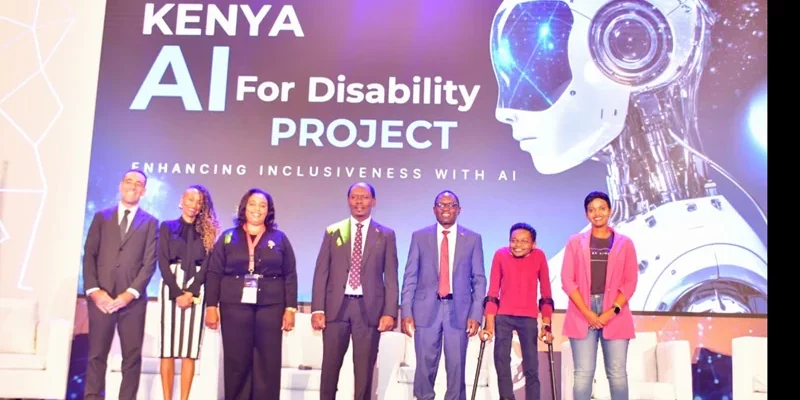
Multi-stakeholder initiative with Huawei, KISE, Qhala, and others to develop AI-driven assistive technologies for persons with disabilities.
The Ministry of Information, Communications and the Digital Economy has officially launched the Kenya AI for Disability Project during the Connected Africa Summit 2026 in Nairobi. The initiative is designed to bridge the digital divide for hundreds of citizens with disabilities across Kenya and the wider African region.
RELATED: AI implementation in Kenya’s financial services sector is surging
Announced during the Summit’s closing ceremony, the project is a collaboration between the Kenya Institute for Special Education (KISE), Qhala, Assistive Technologies for Disability Trust (AT4D), InABLE, and Huawei. Together, they will develop AI-driven hardware and software solutions to empower persons with disabilities.
A Milestone for Inclusive Digital Transformation
The initiative marks a significant milestone in advancing inclusive digital transformation by leveraging Artificial Intelligence to empower persons with disabilities. This multi-stakeholder collaboration brings together policymakers, disability experts, innovation leaders, and global technology partners to build scalable, relevant local solutions that address real, lived challenges.


These challenges have historically held persons with disabilities back from learning, working, and achieving their full potential.
Government Leadership: “Co-Creating Practical Solutions”
Speaking during the announcement, Mary Kerema, who leads on AI and Emerging Technologies in the Kenyan Government, said:
“Together, we are not merely identifying barriers—we are co-creating practical, scalable hardware and software solutions that expand access, restore dignity, and unlock opportunity.”
KISE: Technology as a Lifeline
Dr. Norman Kiogora, Director of KISE, emphasized that technology serves as a lifeline for the disability community.
“To most people, technology makes things easy; but for persons with disabilities, it makes things possible.”
Dr. Kiogora highlighted the strategic importance of the partnership, noting that having a global tech leader like Huawei involved is a “game changer” that will accelerate the development of AI-driven assistive tools and inclusive education.
Huawei: AI Reduces Cost of Accessibility Solutions
Adam Lane, Huawei Kenya‘s Director for Policy and Partnerships, highlighted the transformative power of Artificial Intelligence in driving accessibility.
“The advent of AI has made it significantly more cost-effective to develop hardware and software that is responsive to the unique needs of persons with disabilities. Through this project, we are leveraging AI to empower persons with disabilities, their families, and caregivers, by helping develop tech solutions using AI. This would go a long way in enabling them to secure employment and thrive in society.”
Qhala: Ending Inclusion as an Afterthought
Dr. Shikoh Gitau, CEO of Qhala, emphasized that the initiative resolves a long-standing challenge in technology design.
“For too long, inclusion has been an afterthought in technology design; this project changes that narrative. By uniting government, global tech leaders, and disability experts, we are building an ecosystem where AI works for everyone from the outset. As Africa strides toward a digital future, we have a collective duty to ensure that the future leaves no one behind.”
AT4D: Technology as the Greatest Equalizer
Bernard Chiira, Founder and CEO of AT4D, noted the project’s evolution from earlier efforts.

*“Technology, if designed for inclusion, can be the greatest equalizer. Building upon the AI for Special Needs Innovation Challenge in 2024, AT4D is proud to be part of this public-private partnership to advance AI and assistive technology innovation for a more equitable Kenya.”*
Continental Commitment to Inclusive AI
Stakeholders representing 12 African countries were present at the launch during the Closing Ceremony of the Connected Africa Summit. Their attendance highlights a growing continental commitment to ensuring that Artificial Intelligence is accessible, inclusive, and capable of unlocking opportunities for all—particularly persons with disabilities.
Student Innovators Recognized and Supported
Also present at the launch were students who participated in the AI for Disability Hackathon in 2024. They were commended for their creativity and dedication to solving real-world challenges through technology. Continued support will be provided to help refine and scale these innovations into impactful, real-world solutions. The project will serve as an incubator to scale these student-led innovations into sustainable, market-ready solutions.
Looking Ahead: A Blueprint for Inclusive Innovation
The Kenya AI for Disability Project underscores a shared vision of leaving no one behind in the digital era. The initiative will focus on enhancing digital skills, supporting innovation ecosystems, and enabling meaningful participation in the digital economy for underserved communities.
Through sustained collaboration between government, the private sector, and development partners, the initiative sets a strong foundation for inclusive innovation and a more equitable digital future across Africa. Ultimately, this launch underscores a collective commitment to ensuring that Africa’s digital transformation serves as a blueprint for inclusive innovation.