By
By 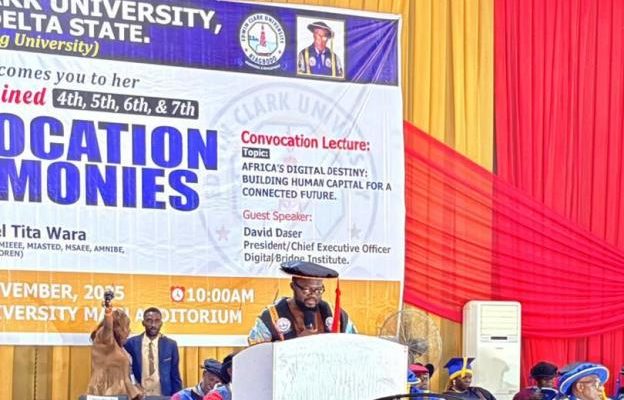
Matters eRising with Olusegun Oruame

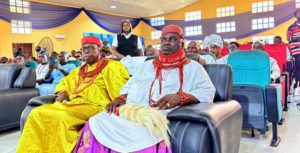
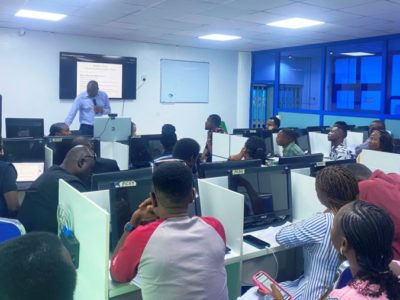
Last Saturday, in the hushed expectancy of an auditorium at Edwin Clark University, a truth was spoken that should shake our continent from its slumber. It wasn’t delivered with bombast, but with the quiet conviction of a man who has seen the future and knows we are perilously late.
Daser David, President of the Digital Bridge Institute (DBI), looked at a sea of young graduates then declared a simple but profound message: “Young Africans do not need a visa to participate in the global economy. What they require are digital skills.”
Remote work has erased geography. Digital platforms have flattened borders. And talent today competes on ability—not nationality.
Let that sink in. For generations, our ambition has been hemmed in by borders, by embassies, by the physical limitations of geography and the socio-political barriers of nationality. That world is gone. Working remotely has vaporized it. The global economy is no longer a distant club with a strict door policy; it is a dynamic, virtual arena.

And in this arena, “talent now competes with talent—not nationality.” This is our single greatest opportunity and our most profound existential challenge.
The Urgent Case for Building Africa’s Digital Armies
Nigeria alone has more than 230 million people, nearly 30% of Africa’s youth population. If ever there was a continental superpower waiting to be activated, this is it. But population without capacity is a burden; population with digital skills is a force.
Institutions like DBI were created to prepare that force—to train the workforce that will drive connectivity, cybersecurity, telecom expansion, digital transformation and Africa’s entry into the knowledge economy.
David’s reminder was sharp:
Nigeria and rest of Africa must stop being a consumer of global digital value and start becoming a producer.
And that begins in the classroom.
The New Colonialism: Digital Illiteracy
We fear a new wave of colonialism, yet we are perpetuating it ourselves through a curriculum of complacency. While our graduates meticulously study theories from bygone eras, the tools shaping the 21st century—AI, data analytics, cybersecurity, digital platforms—are treated as electives, as niche specializations for the “tech kids.”

David’s charge to the academia is a clarion call: “Whether you study agriculture, law, theatre arts, or accounting—the future of your field is digital.”
An agronomist without data science skills cannot optimize smart farming. A lawyer ignorant of fintech regulation is obsolete. Any accountant unfamiliar with blockchain is a relic. Our universities are not producing graduates; they are, in many cases, producing anachronisms.
The institutions created as bridges, like the DBI, are now refocusing to become “national digital skill powerhouses.” But a bridge is useless if the traffic isn’t flowing from both sides. Where is the radical, urgent curriculum overhaul in our universities? I ask: where is the relentless national policy prioritising coding as a second language for every child?
Universities Cannot Remain Analog in a Digital World
Every discipline—agriculture, law, accounting, theatre arts—now has a digital backbone. Yet many universities still teach as if the world remains in the old era.
David’s call was unapologetic:
“Digital literacy must become the foundation for every discipline, not an elective. The digital future is not a solo project. Institutions must collaborate. Government must support. Private sector must invest.”
This is not optional. It is existential.
Government and Industry Must Build the Pipeline
Digital talent won’t grow in isolation. Government must create the environment: broadband policy, startup ecosystems, digital inclusion, research support.
Industry must open doors: internships, mentorships, training partnerships, investment.
Countries that treat digital skills as national infrastructure will rule the future.
From Soil to Silicon: Understanding the Eras That Shape Human Progress
David offered a masterclass in historical context:
- Agrarian Era – opportunity lived in the soil.
- Industrial Era – machines redefined ambition.
- Information Era – knowledge became power.
- AI / Incumbent Era – creativity + intelligence outperform everything.
And in this new era, a young woman in Delta State with a smartphone can:
- Work remotely for a company abroad
- Learn any skill
- Build a global brand
- Use AI to accelerate productivity
- Sell to global markets
- Create content that reaches millions
The new currency is creative, intelligent labour.
Africa’s Future Will Be Written in Classrooms—Not Oilfields
Today’s winners are not defined by minerals but by mastery of digital tools:
- Estonia runs an entire nation digitally.
- India’s digital identity system serves a billion people.
- Kenya revolutionized global finance with M-Pesa.
- Rwanda built a futuristic digital governance model.
These nations prove that strategy—not natural resources—defines economic power.
Africa has the world’s youngest population, growing internet penetration; a rising ecosystem of hubs and startups; and an unrelenting generation that is bold, creative, and hungry
Africa is not behind in talent, we are behind in structure, and structure can be built.
The Three Fires of a New Leadership: Curiosity, Empathy, Urgency
To the graduates, David offered not just platitudes but a battle plan built on three fires that must burn within:
- Curiosity: The defiant act of asking “Why not?” when faced with broken systems. It is the fuel of innovation.
- Empathy: A deep understanding that real technology serves human needs. It asks, “Who does this help?” and ensures scale with purpose.
- Urgency: Most critical of all. In a flattened world, “urgency separates dreamers from doers.” This is not the time for “tomorrow.” The train of the Fourth Industrial Revolution is leaving. We are either on board, or we are left watching its dust on a deserted platform.
For these reasons, a sense of urgency must infect our governments to build broadband not as a project, but as critical national infrastructure. It must drive industry to invest in apprenticeships and R&D partnerships, not just profit extraction. And it must define our youth, who must “Start where you are. Use what you have. Build what you imagine.”
Our Leapfrog Moment: From Agriculture to AI in a Generation
David framed our moment in the sweeping arc of history: from the Agrarian Era (rewarding physical labour), to the Industrial Era (technical labour), to the Information Era (mental labour), to now—the Incumbent Era. This new age rewards creative and intelligent labour.
Here lies our stunning advantage. We do not need to painfully retool rust-belt industries. We can leapfrog. Kenya did it with M-Pesa. Rwanda is doing it with digital governance. Nigeria’s fintech ecosystem is doing it. We can jump from the farm to the cloud, from trading physical goods to exporting intellectual property and digital services.
But this leap is impossible without a springboard of digital literacy. Africa’s future will not be written by what we dig from the ground, but by what we cultivate in the mind. Our human capital is the only resource that appreciates. Technology is merely the tool.
A Final Charge: Build, Don’t Beg
To the class of that Saturday morning, and to every young African staring at a screen that is both a portal and a mirror, the message is clear. The world is hiring. It doesn’t care for your passport; it craves your skill. It doesn’t want your excuses; it needs your solutions.
“Africa does not need more spectators. Africa needs builders, thinkers and innovators. Africa needs you.” The podium has been left. Time for speech is over. The real work, that urgent, collaborative, digitally-empowered work of building our destiny, begins now. Will we code it? Or will we continue to complain about it? The choice, as Daser David made unequivocally clear, is entirely in our hands.