By
By 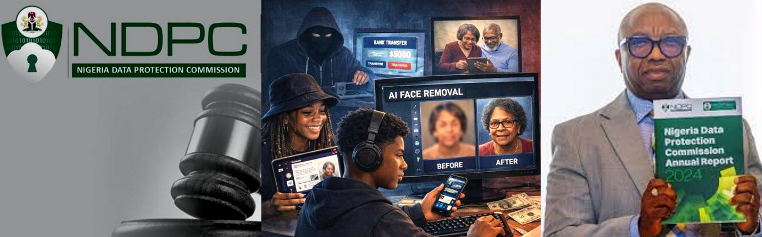
By Osasome, C.O
When Technology Turns Against Trust
For many Nigerians, artificial intelligence (AI) represents hope; smarter services, new jobs, and global competitiveness. But for others, especially children and vulnerable individuals, the same technology has become a source of fear. From AI-generated fake nude images to impersonation videos and defamatory content, digital tools are increasingly being weaponised to violate privacy and dignity.
RELATED: AI-powered fraud is soaring: 83% of experts predict significant rise in deepfake scams
ALSO READ: C-C Pro Launches Cyber Safety Radio Programme
It is against this backdrop that the Nigeria Data Protection Commission (NDPC) has stepped up decisive action, placing Nigeria firmly within a growing global movement to confront the darker side of artificial intelligence.
Nigeria Joins Global Push Against AI-Generated Abuse
In a major international move, the NDPC has joined over 60 data protection authorities worldwide to endorse the Joint Statement on AI-Generated Imagery and the Protection of Privacy, coordinated by the International Enforcement Cooperation Working Group of the Global Privacy Assembly.
The statement responds to mounting global concern over AI tools capable of producing hyper-realistic images and videos of identifiable individuals. These images are deplored often without their knowledge or consent. Increasingly, these deepfakes are used for blackmail, reputational damage, sexual exploitation, and fraud.
According to the NDPC, such abuses are no longer abstract risks. They are lived realities, with children and young people disproportionately affected.
The Human Cost of AI Misuse
Explaining the urgency behind the joint action, Babatunde Bamigboye, Head of Legal, Enforcement and Regulations at the NDPC, expressed concerns of the commision. The NDPC warned that AI-powered image generation has opened new fronts for digital harm.
“These tools are being misused to create non-consensual intimate imagery, defamatory materials, and exploitative content,” the Comission noted.
It stressed that the psychological trauma, particularly for minors, can be severe and long-lasting. The rise of so-called “nudifying apps” and AI-generated child sexual abuse material (CSAM) has amplified calls for stronger safeguards. The Joint Statement stressed the need for faster content takedowns, and accountability for developers and platforms alike.
From Policy to Enforcement: Nigeria’s AI Governance Path
Nigeria’s response to AI risks has been building steadily. Under the leadership of the Minister of Communications, Innovation and Digital Economy, Bosun Tijani, the country initiated the development of a National AI Strategy. This blueptint is designed to balance innovation with safety, rights, and trust.
Complementing this, the NDPC issued its General Application and Implementation Directive (GAID). The GAID mandates privacy-by-design and privacy-by-default principles in the development and deployment of AI systems.

Crucially, the National Commissioner and CEO of the NDPC, Vincent Olatunji, has directed that Compliance Audit Returns (CAR) under the Nigeria Data Protection Act (NDPA) will now serve as a key tool for monitoring how organisations use AI for data processing.
This signals a clear shift from advisory guidance to measurable, enforceable compliance.
What the Law Says: AI Abuse Is Not a “Harmless Prank”
Under Nigeria’s data protection and cybercrime frameworks, the misuse of AI to generate non-consensual or indecent images is a serious offence. Biometric identifiers, often manipulated in deepfakes, are classified as sensitive personal data. They require explicit consent and strict handling.
The NDPC is therefore pushing for:
- Safety-by-design obligations for AI developers
- Transparent data usage and training disclosures
- Rapid and effective takedown mechanisms by digital platforms
- Strong penalties for organisations and individuals that enable abuse
Protecting the Next Generation
Beyond enforcement, the Commission is investing in prevention. Through initiatives such as Privacy Clubs and the Adopt-a-School programme, the NDPC is promoting digital literacy, online safety, and ethical technology use among young Nigerians.
These efforts recognise a simple truth: laws alone cannot solve the problem unless users, especially children and parents, understand the risks and their rights.
NDPC, C-C Pro, others: Building Digital Fortresses for Nigeria’s Youngest Citizens
Organisations such as the Child Protection Initiative Against Cyber Crime (C-C Pro) have remained at the forefront of efforts to build a safer digital environment for children and young people in Nigeria. Through initiatives like its annual Nigeria TeenTech Mentorship Programme and ngTeen CyberFest, C-C Pro has continued to champion cyber safety education, digital literacy, and child protection. All of these in response to the growing risks within Nigeria’s fast-evolving digital landscape.
Working closely with the NDPC and other key stakeholders, C-C Pro has sustained advocacy and practical engagement. These are aimed at empowering young people, parents, and educators to navigate the internet safely and responsibly. As expected, these partnerships reflect a coordinated, multi-stakeholder approach to addressing cybercrime, online exploitation, and digital rights awareness.
Most recently, C-C Pro expanded its outreach with the launch of a new radio programme, Cyber Talks with C-C Pro, on Municipal FM 95.3 Abuja. The programme is designed as an accessible and practical platform for regular conversations on online safety. It also covers thematic areas like cybercrime prevention, digital rights, and responsible technology use. Cyber Talks with C-C Pro is bringing critical cyber awareness directly into homes and communities across Abuja and beyond.
A Defining Moment for Responsible AI in Nigeria
As artificial intelligence becomes more embedded in daily life, Nigeria’s actions reflect a growing recognition that innovation without safeguards can erode trust, harm lives, and undermine social cohesion.
By aligning with global regulators while strengthening local enforcement, the NDPC is signalling that Nigeria intends to shape the future of AI responsibly. The agenda is clear: protecting privacy, defending dignity, and putting people, not algorithms, at the centre of digital progress.