By
By 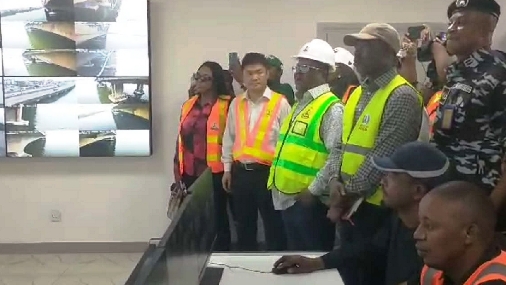
Umahi Says Project Marks New Era of Smart Monitoring on Federal Highways
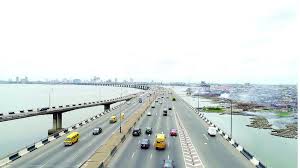
The Federal Government has inaugurated a ₦40 billion Closed-Circuit Television (CCTV) surveillance centre on Lagos’ Third Mainland Bridge, a major step aimed at strengthening security, improving traffic management, and enhancing road safety on one of Nigeria’s busiest transport corridors.
RELATED: Lagos closes gaps to becoming smart city with state-wide fibre infrastructure, CCTV cameras
The facility was commissioned during an inspection tour of federal roads and bridges in Lagos State by the Minister of Works, Engr. Dave Umahi, who said the project aligns with the Federal Government’s broader plan to deploy smart infrastructure solutions across the country.
Enhancing Security and Traffic Enforcement
According to the minister, the CCTV centre will support law enforcement agencies in monitoring traffic flow, enforcing speed limits, and responding swiftly to infractions on the bridge.
Explaining the operational framework, Umahi said the police will determine speed limits and ensure that motorists are properly informed.

“We are handing over two vehicles and a surveillance boat to the police as part of this project,” the minister disclosed.
He also announced the creation of a special “lay-by” extension on the bridge, where traffic officers can safely pull over offending vehicles without disrupting the flow of traffic.
“If any vehicle breaks the law or overspeeds, officers will pull them over at the lay-by to avoid congestion and take necessary action,” Umahi said.
Part of Tinubu’s National Road Safety Directive
The Minister of Works noted that the CCTV project reflects President Bola Tinubu’s directive to improve safety standards and security on federal highways nationwide.
“This is just a sample of what we intend to implement across all federal roads. We are building infrastructure that will last between 50 and 100 years,” he said.
Umahi stressed that modern surveillance and traffic management systems will become standard features of Nigeria’s road infrastructure as the government pushes for durable, technology-driven solutions.
Bridge Rehabilitation and Infrastructure Upgrades Underway
Beyond the Third Mainland Bridge, the minister outlined ongoing efforts to upgrade and expand road and bridge infrastructure across Lagos, including works on the Tomeland Bridge and the Qatar Bridge.
He acknowledged challenges such as ageing structures, weak maintenance culture, and complex engineering demands, noting that the Federal Government is responding through targeted rehabilitation and replacement programmes.

On the condition of the Qatar Bridge, Umahi warned of serious structural deterioration beneath the waterline.
“We are doing all remedial works possible and praying the bridge holds until its replacement, which is expected within three years,” he said.
Safety Measures and New Construction Standards
The minister assured Nigerians that public safety remains the top priority, with strict restrictions placed on heavy-duty trucks and continuous monitoring of bridges in Lagos and across the country.
He disclosed that the government has constituted expert committees to assess the condition of critical bridges and recommend funding for urgent repairs where necessary.
Umahi also announced reforms in road construction policy, including the mandatory use of pavers and concrete for road shoulders, a move aimed at improving durability and reducing the frequency of costly repairs.
Call for Public Support
Concluding his remarks, the minister appealed for patience and cooperation from the public, stressing that infrastructure projects are critical to Nigeria’s economic growth and long-term development.
He reaffirmed the Federal Government’s commitment to building a safer, smarter, and more resilient transport network that supports commerce, mobility, and national security.