By
By 
By Jessica Hawkey, Managing Director at redAcademy
In 2025, the World Economic Forum’s Future of Jobs report underscored the value of skills in the new employment economy. An economy that’s driven by technology, data and AI and expected to displace upwards of 92 million jobs. Of course, it’s also expected to create 170 million more, but where do these new roles come from? And what are employers looking for when it comes to filling them?
RELATED: Bridging the tech talent gap: redAcademy partners with Flash Group
Since 2024, skills-based hiring has become a definitive trend with up to 52% of companies not requiring that candidates have a formal education in their job specifications. The Indeed survey also found that companies mentioning college degrees have dropped across 87% of industries.
Skills Deficit Emerges as Key Barrier to Next-Gen Technology and Business Transformation
According to the World Economic Forum’s report, companies in South Africa (more than 60%), have identified skills as a core challenge, inhibiting their ability to benefit from next-generation technologies and business transformation.
As a result, 34% are removing the need for a degree as a requirement of employment so pathways to career development are easier and more accessible. This is accompanied by upskilling and skills development programmes designed to create a talent pool built on cognitive skills and capabilities.
And yet, even though degrees are becoming less central to employment, the expectations placed on early-career employees have increased. With so many entry-level tasks now handled by automation, juniors are no longer hired to learn by doing the basics, they are hired with the intention of having them contribute from the outset.
This means they need to learn how to work without perfect information, manage competing deadlines and communicate effectively in a team. They also need to know how to apply judgement when nobody is available to provide step-by-step instructions.
Why Crucial Cognitive Skills—Adaptation, Prioritization, Ownership—Are Forged in Practice, Not Taught
These cognitive skills are rarely taught. The ability to adapt, prioritise, clarify and take ownership typically developed through practice, especially in environments where expectations are high.
Employers are focusing on what a candidate has done and not just on what they’ve studied because they need people who can step into their roles and get their hands dirty from day one. This is also why integration models, where learners work inside delivery teams with defined outputs, are becoming more influential than legacy internship structures.
This integration works because it demands actual input from learners and doesn’t treat them like they’re passengers. In a technical environment, for example, these learners are expected to complete tickets, meet standards, present outcomes and take feedback from real managers and technical leads while still in an internship role.

Practical Skills Assessment: A More Accurate Gauge of Ability Than Traditional Qualifications
Employers can see these learners working through complexity and engaging with feedback in a real setting and it allows them to evaluate individuals based on how they work and improve over time. It’s a more realistic view of a learner’s real skillsets than traditional qualifications and routes to employment.
The value extends to those learners who take a different route to their careers. They can confidently answer questions around their understanding of the role and what’s expected of them. They know if they are capable of moving independently, how they handle accountability, and what it’s like to work to tight deadlines.
It’s a value proposition that also supports learners at a time when AI is accelerating the rate of career and opportunity change. It is reducing the space for passive contributions with tools that can generate summaries, test code, flag errors and automate basic processes.
Juniors don’t have a lot of room left to find their niche or prove their value. Which explains the change in company approaches to skills development and hiring. They’re under pressure to hire people who can deliver immediately and can’t afford long onboarding curves or high turnover at the junior level. And many have found that traditional graduate pipelines often fail to produce work-ready candidates.
Corporate Investment Pivots from Generic Training to Targeted, High-Impact Programs
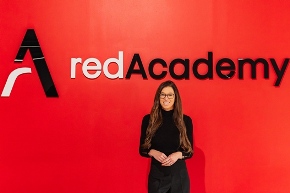
Hawkey
The result is that companies are moving their investment away from generic programmes towards more structured, performance-linked alternatives that give them access to candidates who have already built their skills on strong cognitive foundations. Who have already been exposed to the tools and environments they will be expected to navigate in the working environment.
In the end, cognitive capability has become a litmus test for candidate hiring and is invaluable as a demonstrated, tested and recognised skill that ensures young learners are easily integrated into real teams from the outset. It saves time and money, and learners enter the workforce with more confidence.