By
By 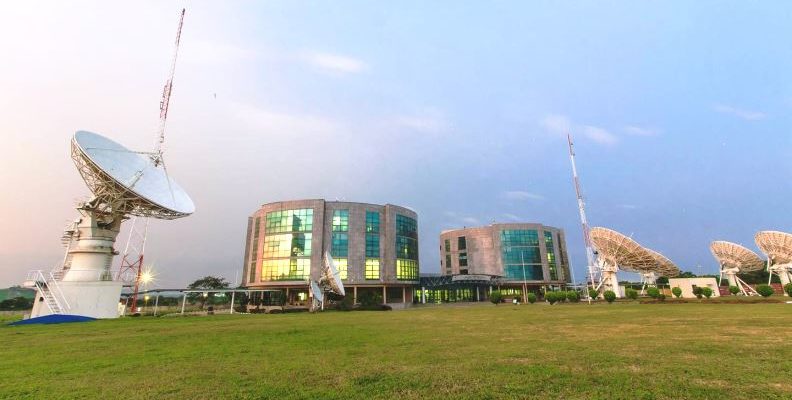
By Osasome, C.O
Outstanding Payments Threaten Operations of NIGCOMSAT-1R Satellite
China Great Wall Industry Corporation (China Great Wall Industry Corporation) has issued a final 30-day ultimatum to NIGCOMSAT Limited over an outstanding debt of $11.44 million, accumulated over a seven-year period.
RELATED: Transforming NIGCOMSAT for a secure future: Jane Egerton-Idehen’s challenge
The ultimatum, dated March 9, 2026, warns that failure to settle the debt or provide an acceptable financial guarantee within the stipulated period could result in the suspension of services on active transponders of the NIGCOMSAT-1R satellite, potentially disrupting satellite communications services linked to Nigeria’s digital infrastructure.
Letter Copied to Presidency, Customers Advised of Possible Disruption
According to multiple media reports, the notice was conveyed in a letter addressed to the Managing Director of NIGCOMSAT Limited. President of the Federal Republic of Nigeria, Bola Tinubu, was copied.
The letter, signed by Liu Lan, Director of Marketing (Africa) at CGWIC, urged NIGCOMSAT to inform its customers of the potential service disruption. It noted that continued satellite performance could no longer be guaranteed without payment.
“As of December 31, 2025, the total net outstanding debt owed by NIGCOMSAT to CGWIC stands at USD 11,442,335.89,” the letter stated. No payments have been received since 2019, despite the continued provision of critical satellite support services, it added.
Services at Risk: Telemetry, Tracking and Command (TT&C)
CGWIC disclosed that it has continued to provide essential Telemetry, Tracking and Command (TT&C) services for NIGCOMSAT-1R from its facility in Kashi, China, over the years, even as payments remained outstanding.
“For the past seven years, CGWIC has acted in goodwill to support Nigeria’s satellite operations. However, pressure from internal auditors and subcontractors means we can no longer sustain these operations without remuneration,” the company noted.
The Chinese firm further revealed that previous negotiations in 2023 and early 2025 were not successfully concluded. They include proposals that involved partial debt forgiveness, prompting the issuance of the final ultimatum.
Critical Timing for Nigeria’s Satellite Programme
The development comes at a sensitive moment for Nigeria’s satellite communications infrastructure. The NIGCOMSAT-1R satellite was launched in 2011 with an original 15-year lifespan. It is scheduled to reach the end of its design life in 2026. But the Federal Government has announced an operational extension to 2028.
In parallel, the government has approved the procurement of NigComSat-2 and NigComSat-3 to replace and expand Nigeria’s satellite capacity. The two new satellites are estimated at about $500 million. However, funding pressures remain, with the 2026 budget allocation for the NigComSat-2 project reportedly reduced by 30%.
Governance, Infrastructure and National Security Concerns
Industry stakeholders have raised concerns about Nigeria’s reliance on offshore facilities for satellite control operations. They are particularly irked by the continued dependence on CGWIC-managed TT&C infrastructure outside the country. Analysts argue that revitalising domestic ground station operations would enhance national communications autonomy, data sovereignty, and cost efficiency.
Questions have also been raised regarding Nigeria’s compliance with orbital slot obligations under the International Telecommunication Union, as well as the long-term sustainability of its satellite governance framework.
NIGCOMSAT Limited, established in 2006 under the Federal Ministry of Communications and Digital Economy, manages Nigeria’s communications satellites. Over the years, the agency has faced operational and administrative challenges, prompting calls from some stakeholders for deeper reforms. Reforms will ensure efficiency, accountability, and competitiveness in a rapidly evolving satellite and digital economy landscape.
Efforts to obtain official comments from NIGCOMSAT Limited were unsuccessful as of the time of filing this report.
Implications for Nigeria’s Digital Economy
A disruption to NIGCOMSAT-1R services could affect sectors that rely on satellite connectivity, including broadcasting, rural broadband access, emergency communications, and government services. Experts warn that resolving the debt issue swiftly is critical to safeguarding Nigeria’s digital infrastructure and maintaining confidence among international partners as the country pursues broader digital economy ambitions.