By
By 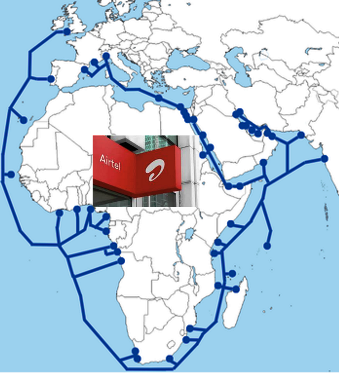
Airtel Nigeria Expands International Connectivity
Airtel Nigeria has announced plans to activate a second international internet breakout point through the 2Africa submarine cable. This brings inbound network traffic into Nigeria from the South-South region via Kwa Ibo in Akwa Ibom State. The new gateway complements Airtel’s existing international breakout infrastructure in Lagos.
RELATED: 2Africa cable lands in Nigeria and Ghana
A major development, it marks a shift from Nigeria’s long-standing dependence on a single international connectivity corridor.
Strengthening Nigeria’s Digital Backbone
By introducing an alternative southern route, Airtel Nigeria is adding critical redundancy and additional capacity to the country’s internet infrastructure. The move reduces reliance on a single landing zone, and enhances resilience. It also improves overall internet performance for businesses, consumers, and public sector services nationwide.
According to the company, the new breakout point aligns with its expanding national fibre footprint and ongoing quality-of-service investments. The activation lays the groundwork for a more reliable, high-capacity internet experience for Nigerians.
A First-of-Its-Kind Strategic Move
Industry observers describe the initiative as the first of its kind in Nigeria. It will enable true geographic diversity in international internet access. With multiple ingress points, the risk of widespread service disruption due to cable faults or congestion is significantly reduced. supporting the country’s growing digital economy.

About the 2Africa Submarine Cable System
The 2Africa cable is the world’s longest subsea cable system, spanning approximately 45,000 kilometres and connecting dozens of locations across Africa, Europe, and the Middle East. Designed with a capacity of up to 180 terabits per second, it leverages advanced Spatial Division Multiplexing (SDM1) technology and innovative aluminium conductors to deliver massive bandwidth at lower cost.
The cable system is deployed by a global consortium that includes Meta, Vodafone, and Orange, alongside other international telecom and infrastructure partners.
Resilience, Open Access, and Global Reach
Key features of the 2Africa system include deeper cable burial to minimise breakages, and routing that avoids high-risk seabed zones. It also features an open-access model that allows multiple service providers to connect at carrier-neutral data centres. This structure is expected to promote competition, lower wholesale bandwidth costs, and improve service quality across connected markets.
With landings across Africa—including Nigeria, Ghana, and South Africa—and extensions into Europe, the Middle East, and Asia, the system is designed to serve more than three billion people.
Economic Impact on Africa
The 2Africa project is projected to contribute up to $36.9 billion to Africa’s GDP within its early years of operation by accelerating job creation, entrepreneurship, and digital innovation.

For Nigeria, Airtel’s new southern international gateway positions the country to better leverage this capacity for sustained broadband growth and economic transformation.