By
By 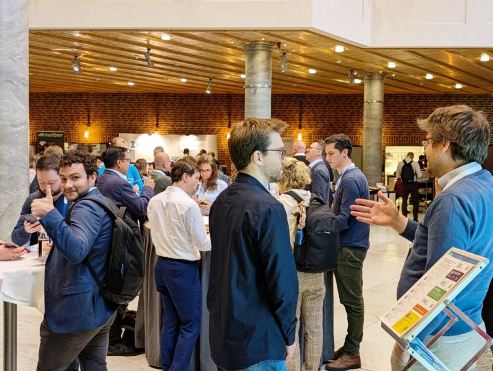
Global Experts Converge on AI-Driven Circular Innovation
The AI Circular Economy Conference 2026, organised by nova-Institute, convened 116 participants from 15 countries in Cologne and online, spotlighting how artificial intelligence (AI) is accelerating the transformation of the chemical and materials industries toward circular and renewable carbon systems.
RELATED: Africa’s circular economy takes off: Innovation, jobs, and green growth converge across the continent
Over two days, industry leaders, researchers, start-ups and investors explored how digital intelligence is moving beyond experimentation to real-world industrial deployment, enabling more efficient circular value chains and sustainable material innovation.
Where Artificial Intelligence Meets the Circular Economy
Summing up the conference theme, Lars Börger, CEO of nova-Institute, described the intersection of AI and circular economy as a powerful collision of ideas capable of creating systemic change.
Participants emphasised that while AI and circular economy are each rapidly evolving fields, their convergence unlocks new levels of efficiency, innovation and scalability. Discussions therefore extended beyond technology to include open data ecosystems, interdisciplinary collaboration and new industry partnerships linking software developers, materials scientists, manufacturers and policymakers.
Five Thematic Tracks Highlight Practical AI Applications
The conference programme was structured around five thematic blocks, illustrating how AI is increasingly applied across the entire circular value chain—from materials design and production to recycling, resource optimisation and market decision-making.
Case studies from companies and institutions such as Covestro, Schneider Electric, Volkswagen, RWTH Aachen University and the European Circular Bioeconomy Fund demonstrated how AI tools are already reshaping industrial processes.
Applications showcased included:
- Digital twins and predictive maintenance for real-time process optimisation
- Machine learning models accelerating the discovery of new catalysts, polymers and bio-based materials
- AI-powered sorting and hyperspectral imaging to improve recycling quality and enable higher-value material recovery
A recurring message across sessions was clear: AI delivers real value only when combined with high-quality data, industrial expertise and robust digital infrastructure.
AI Emerging as a Catalyst for the Renewable Carbon Economy
One of the strongest conclusions from the conference was that AI is fast becoming a core enabler of the renewable carbon economy.
By shortening innovation cycles, improving resource efficiency and supporting smarter decision-making, AI can help industries transition from fossil-based value chains to circular systems built on biomass, captured CO₂ and recycled materials. Speakers highlighted AI’s growing role in enhancing productivity, sustainability and global competitiveness across the chemical and materials sectors.

Strong Partner and Media Ecosystem
The AI Circular Economy Conference 2026 was supported by a wide network of strategic partners committed to advancing renewable carbon and circular materials. These included industry clusters, research institutions and innovation networks spanning biotechnology, plastics, AI and sustainable manufacturing.
A diverse group of international media partners also amplified conference insights, helping to share best practices and emerging trends with a global audience of researchers, innovators and decision-makers.
Continuing the Global Dialogue on AI and Circular Systems
nova-Institute confirmed that discussions on AI-enabled circular innovation will continue at upcoming flagship events, including the Carbon Capture & Utilisation Conference (April 2026), the Renewable Materials Conference (September 2026) and the Advanced Recycling Conference (November 2026).
Across these platforms, experts will further examine how AI, data infrastructure and digital tools can accelerate industrial transformation, strengthen resource efficiency and support the global shift toward a circular and renewable carbon economy.