By
By 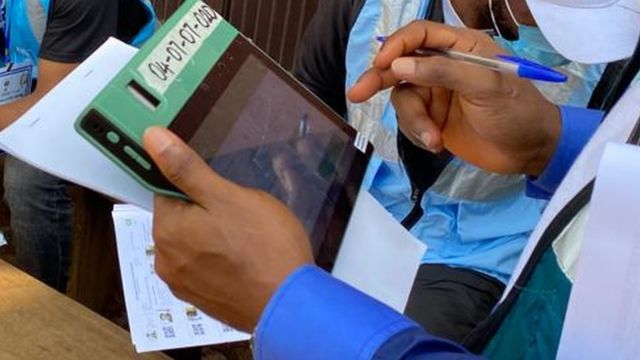
Matters eRising with Olusegun Oruame
A Nation on Edge as 2027 Approaches
With fewer than two years to Nigeria’s 2027 general elections, anxiety is thick in the air. Across cities, towns and rural communities, millions of Nigerians are asking the same question: will their votes truly count this time?
RELATED: Real-time transmission of electoral results in Nigeria: A policy clarification for lawmakers
For a country of over 230 million people, scarred by disputed elections, legal battles and public distrust, the Senate’s conditional approval of electronic transmission of election results has reopened old wounds—while offering a fragile glimmer of hope.
Senate Approves Electronic Transmission—With Conditions
On February 10, 2026, the Nigerian Senate approved an amendment to the Electoral Act, permitting the electronic transmission of results from polling units to the INEC Result Viewing Portal (IReV).
The decision followed weeks of heated debate, public outrage and street protests, reversing an earlier Senate position that rejected mandatory electronic transmission.

Under the amended Section 60(3), the framework now provides:
- Electronic transmission of results after polling unit result forms (EC8A) are completed, signed and stamped
- Manual collation as fallback where network or technology fails
- No legal requirement for “real-time” transmission, a phrase deliberately removed by lawmakers
Why “Real-Time” Became the Breaking Point
The omission of “real-time” transmission lies at the heart of Nigeria’s renewed electoral controversy.
While the House of Representatives supported mandatory real-time uploads, the Senate initially rejected it. The green chamber argued that network failures could trigger post-election litigation and invalidate results.
Senate President Godswill Akpabio later admitted lawmakers intentionally removed the phrase to avoid legal disputes arising from technological “glitches.”
For many Nigerians, however, that explanation only deepened suspicions.

Protests, Public Outrage and a Crisis of Trust
The Senate’s initial rejection sparked nationwide protests, including the “Occupy National Assembly” demonstrations in Abuja.
Prominent opposition figures such as Peter Obi, Omoyele Sowore, Rotimi Amaechi, and Simon Dalung joined civil society groups to demand mandatory electronic transmission.
On social media and radio talk shows, citizens voiced fears that allowing manual results to prevail—even conditionally—creates loopholes for manipulation during result movement from polling units to collation centres.
For a population already distrustful of institutions, the episode reinforced a painful belief: rules seem to change when power is at stake.
The Burden Now Falls on INEC
With the amendment passed, pressure has shifted squarely to the Independent National Electoral Commission (INEC).
The Senate’s caveat effectively transfers the credibility of future elections to INEC’s technical preparedness, operational integrity and transparency. This is despite the Supreme Court previously ruling that INEC regulations alone lack the force of law.
INEC relies on the Bimodal Voter Accreditation System (BVAS) to:
- Verify voters biometrically
- Capture images of signed Form EC8A
- Upload results to the IReV portal
While INEC insists the system works, many Nigerians remain unconvinced.
Technology vs Reality: Can Nigeria’s Infrastructure Cope?
At the centre of the debate is Nigeria’s fragile technology and telecoms infrastructure.
Supporters argue:
- Result uploads require minimal bandwidth, similar to SMS or 2G data
- Over 90% of polling units reportedly have basic network access
- Satellite solutions, including Starlink, could cover blind spots
Sceptics counter:
- Rural connectivity remains unreliable
- Power outages are frequent
- Poor implementation could disenfranchise remote communities
- “Technical failures” may be exploited to override electronic records
This tension reflects a deeper national dilemma: Nigeria’s digital ambition is racing ahead of its infrastructure reality.
Political Parties Fear the Worst
Opposition parties fear that the manual fallback provision may once again dominate contentious elections, especially in tight races.
For them, electronic transmission is not merely a technical upgrade—it is a trust-building mechanism in a country where ballot box snatching and result alteration are part of electoral memory.
Civil society groups warn that unless electronic transmission becomes the unquestioned norm, public confidence in 2027 may collapse further.
Lessons from the Past, Stakes for the Future
Groups such as Yiaga Africa point to successful BVAS and IReV deployments in Edo and Ondo elections as proof that the technology works when political will exists.
Yet nationally, consensus remains elusive.
More than 70% of Nigerians, according to multiple civic surveys, support electronic transmission as essential for credible elections—but lawmakers remain cautious, reflecting fears of litigation, infrastructure gaps and political backlash.
A Defining Moment for Nigerian Democracy
The Senate’s backtracking signals responsiveness to public pressure. But it also exposes unresolved contradictions in Nigeria’s democratic journey.
As 2027 draws nearer, Nigerians are not just asking for technology; they are demanding trust, certainty and dignity at the ballot box.
Whether electronic transmission becomes a shield for democracy, or another contested promise, will depend on what happens next: infrastructure investment, transparent regulations, and the political courage to let votes speak louder than power.