By
By 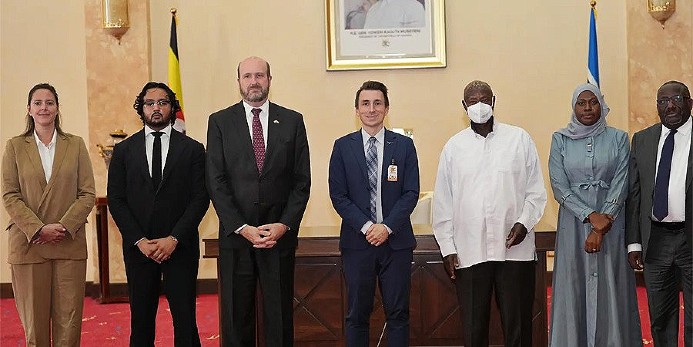
Uganda Approves Starlink After Months of Regulatory Review
Uganda has officially granted an operating licence to Starlink, the satellite broadband company owned by SpaceX, ending months of regulatory negotiations and clearing the path for commercial deployment.
RELATED: Uganda to launch first national IP peering exchange to boost digital sovereignty and cut internet costs
The landmark agreement was signed on May 15, 2026, at State House Entebbe, under the supervision of President Yoweri Museveni, between the Uganda Communications Commission (UCC) and Starlink. The approval positions Uganda among a growing group of African countries embracing satellite-based internet connectivity to bridge access gaps.
Licence Conditions Emphasise Oversight and Accountability
Under the licence terms, Starlink is permitted to begin commercial operations in Uganda but must comply with a number of regulatory safeguards. These include establishing a local physical presence, deploying a national gateway, registering in-country devices, and maintaining technical and legal staff within Uganda.


President Museveni said the government’s focus was on transparency, security, and revenue assurance within the telecommunications ecosystem.
“Our interest is security, revenue assurance and knowing exactly what is happening within the telecommunications ecosystem,” Museveni stated.
Regulators said the conditions are designed to ensure national security, regulatory oversight, and compliance with taxation and data governance requirements.
Uganda Joins an Uneven African Rollout
Starlink is already operational in several African markets, including Nigeria, Kenya, Rwanda, Mozambique, Malawi, Zambia, and Ghana, where it has been deployed to extend connectivity to rural and underserved regions with limited fibre infrastructure.
However, its expansion across the continent has been uneven. Namibia has rejected Starlink’s licence application over regulatory and ownership concerns, while South Africa and Cameroon have delayed approvals due to local equity, empowerment, and compliance requirements.
This divergence has created a fragmented African satellite broadband market, shaped more by national policy choices than by technical network coverage.
Government: Balancing Connectivity With Sovereignty
Dr Aminah Zawedde, Permanent Secretary at Uganda’s Ministry of ICT and National Guidance, said the approval followed extensive consultations to align Starlink’s operations with domestic laws.
“Under this licence, we have agreed on clear obligations including a national gateway, device registration and a physical presence in Uganda to ensure compliance and accountability,” she said.
She added that the framework was designed to attract foreign investment while safeguarding national security and data sovereignty.

Starlink Targets Rural and Underserved Areas
Starlink representative Ryan Goodnight welcomed the approval, saying the company was eager to improve internet access and affordability in Uganda.
“We are very excited to bring this network to Uganda,” he said, noting that the service would support education, healthcare, and broader participation in the digital economy.
He added that Starlink plans to collaborate with government agencies to support connectivity in selected public institutions as part of its rollout strategy.
Implications for Uganda’s Telecom Market
Uganda’s telecom sector is currently dominated by mobile network operators and fibre providers that have invested heavily in terrestrial infrastructure. Analysts say satellite internet could accelerate broadband penetration in remote areas where traditional rollout remains costly.
While Starlink’s entry is expected to complement existing networks in rural regions, it may also introduce new competitive pressures in low-density markets, potentially reshaping pricing models and long-term infrastructure strategies.
Outlook: A Cautious but Strategic Opening
Uganda’s approval of Starlink reflects a cautious but forward-looking approach to digital infrastructure policy. By coupling market access with strict operational conditions, the government aims to expand connectivity while retaining regulatory control.
As satellite, mobile, and fibre networks increasingly converge across Africa, Starlink’s entry into Uganda marks another step in the continent’s evolving digital connectivity landscape.