By
By 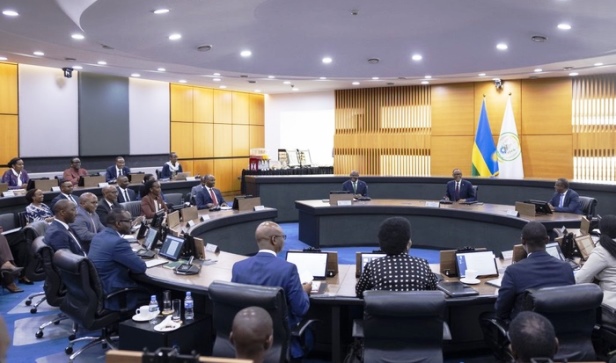
New institution to coordinate public-private initiatives as Kigali aims to become one of Africa’s main AI hubs with $17 million in funding.
Rwanda is strengthening its institutional framework for artificial intelligence. On Monday, June 8, the Council of Ministers approved the creation of the National Artificial Intelligence Agency.
RELATED: Africa Trade Gateway launches in Rwanda to drive AfCFTA digital trade integration
This new body will be tasked with accelerating the development, adoption, investment, and governance of AI to support the country’s digital transformation and economic growth.


ALSO READ: Rwanda: Kigali AI Summit backs $60bn fund
The agency will be the first Rwandan institution entirely dedicated to this technology. It will coordinate public and private initiatives, foster the emergence of AI-based solutions, and strengthen the governance framework necessary for its deployment in sectors such as administration, health, education, and agriculture.
Implementing the National AI Strategy
The implementation of the national AI strategy should optimise processes, improve decision-making, and enhance the efficiency of both public and private services.
The authorities have chosen to establish a new dedicated institution rather than embedding AI functions within existing ministries.
This decision is in line with the national policy on artificial intelligence adopted in 2023.
Through this roadmap, Kigali aims to become one of the main African hubs for AI by focusing on skills development, research, data infrastructure, private investment, and responsible innovation.
$17 Million AI Scaling Hub Programme
The announcement also comes as Rwanda accelerates investments in its technology ecosystem. The Rwanda AI Scaling Hub programme has secured approximately 25 billion Rwandan francs (nearly US$17 million) in funding.
Several international partners are supporting the initiative. The funding will be used to drive the adoption of artificial intelligence solutions in both the economy and public services across Rwanda.

Consolidating Africa’s AI Leadership
Beyond the creation of a new administration, Kigali is primarily seeking to consolidate its lead on a continent where most countries are still in the strategic planning stage.
As early as 2023, the Minister of ICT and Innovation, Paula Ingabire, indicated that nearly 70% of the national AI policy was dedicated to skills development, considered the main lever for building a local industry capable of producing solutions adapted to African realities.
Addressing Talent and Research Challenges
This approach addresses a broader economic challenge. According to UNESCO, Rwanda still faces challenges related to the availability of skilled talent, training data, and research capacity.
However, the country possesses significant strengths, including a regulatory environment conducive to digital innovation and a government strategy strongly focused on emerging technologies.