By
By 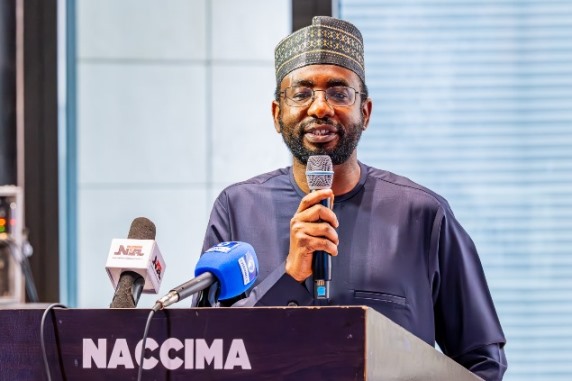
NITDA Says Digital Infrastructure Must Drive Nigeria’s Industrialisation Agenda
The National Information Technology Development Agency (NITDA) has declared that expanding Nigeria’s digital infrastructure is fundamental to achieving sustainable industrialisation, economic diversification and the Federal Government’s ambition of building a $1 trillion economy.
RELATED: NITDA’s Abdullahi showcases Nigeria’s digital infrastructure vision at Datacloud Global Congress 2026
The agency made the declaration at the maiden edition of the Nigeria Infrastructure Conference (INFRACON 2026), organised by the Nigerian Association of Chambers of Commerce, Industry, Mines and Agriculture (NACCIMA) in Abuja under the theme: “Mobilising Private Capital for Sustainable Infrastructure Development in Nigeria.”
The conference brought together policymakers, investors, private sector leaders and development stakeholders to explore innovative financing models and strategic partnerships capable of closing Nigeria’s infrastructure deficit while accelerating industrial growth.


Digital Infrastructure No Longer Optional
Speaking at the conference, the Director General of NITDA, Kashifu Inuwa Abdullahi, stressed that digital infrastructure has become an indispensable component of modern economic development, noting that traditional infrastructure can no longer be planned in isolation from digital technologies.
According to him, virtually every sector of the economy—including manufacturing, agriculture, transportation, healthcare, education and commerce—is becoming increasingly digitised, making it imperative for Nigeria to embed digital capabilities into every new infrastructure project.
“We cannot talk about infrastructure without digital infrastructure. All organisations and industries are becoming digital. Our technology is becoming increasingly integrated. There is a need to integrate digital into the conventional infrastructure we are building,” Abdullahi said.
He explained that integrating fibre connectivity, smart technologies, cloud infrastructure, artificial intelligence, data systems and digital platforms into roads, ports, industrial parks, power systems and public facilities would significantly improve productivity, efficiency and long-term national competitiveness.
Why Digital Infrastructure Matters to Nigeria’s Industrialisation
Abdullahi noted that robust digital infrastructure has become the backbone of industrial economies worldwide, enabling smarter manufacturing, efficient logistics, digital trade, automation and innovation-driven enterprises.
He argued that for Nigeria to successfully industrialise, infrastructure investments must extend beyond physical assets to include broadband networks, digital connectivity and intelligent systems capable of supporting Industry 4.0 technologies.
Such integration, he said, would strengthen urban resilience, improve public services, enhance business competitiveness and position Nigeria as a preferred destination for technology-enabled investments.
Public-Private Partnerships Critical to Infrastructure Expansion
The NITDA Director General commended the Federal Government for expanding opportunities for private sector participation through Public-Private Partnerships (PPPs), describing private capital as essential to bridging Nigeria’s enormous infrastructure financing gap.

He reaffirmed NITDA’s commitment to collaborating with NACCIMA and other industry stakeholders to accelerate digital infrastructure deployment across the country.
“The government has initiated Public-Private Partnerships for the private sector to be part of building the infrastructure. NITDA will support you to work with the government in building the digital infrastructure. We are already working with NACCIMA on how to digitise its infrastructure,” he said.
The partnership, he noted, reflects the agency’s broader strategy of supporting businesses and institutions through digital transformation initiatives that enhance operational efficiency and economic growth.
INFRACON 2026 to Mobilise Private Capital for National Development
In his welcome address, NACCIMA President, Engr. Jani Ibrahim, described INFRACON 2026 as a strategic platform designed to mobilise private investment, innovative financing and collaborative partnerships for Nigeria’s infrastructure development.
He said the conference represents a new national effort to connect investors, policymakers and development institutions around bankable infrastructure projects capable of stimulating industrialisation, exports and job creation.
According to him, NACCIMA is actively identifying investment-ready projects while working with government and development partners to accelerate implementation and monitor progress toward national economic objectives.
Priority Sectors for Infrastructure Investment
Ibrahim disclosed that this year’s conference focuses on sectors considered critical to Nigeria’s long-term economic competitiveness, including:
- Power and electricity
- Maritime and Blue Economy
- Digital economy and digital infrastructure
- Infrastructure for increased national productivity
- Industrialisation and export growth
He noted that strengthening these sectors would improve Nigeria’s productive capacity while attracting domestic and foreign investments needed to support sustainable development.
Positioning Nigeria as Africa’s Digital Investment Hub
The NACCIMA President reiterated the organised private sector’s commitment to supporting government efforts to position Nigeria as Africa’s preferred destination for digital investment.
According to him, stronger collaboration between government and industry would help mobilise capital, accelerate infrastructure delivery and unlock new economic opportunities across multiple sectors.
“Together, we can mobilise the capital, build the infrastructure that powers industrialisation, expand exports, create jobs and deliver sustainable prosperity. Together, we can build the foundation for Nigeria’s one-trillion-dollar economy,” Ibrahim stated.
Digital Infrastructure Emerging as Nigeria’s New Growth Engine
As Nigeria accelerates its digital transformation agenda, experts increasingly view digital infrastructure as the connective tissue linking every productive sector of the economy.
Beyond broadband connectivity, investments in fibre networks, cloud computing, data centres, cybersecurity, artificial intelligence and smart public infrastructure are becoming essential enablers of industrial competitiveness, digital innovation and inclusive economic growth.
With stronger public-private collaboration, analysts believe Nigeria can leverage digital infrastructure to modernise manufacturing, improve government services, deepen financial inclusion and strengthen its position as one of Africa’s leading digital economies.