By

Nigeria’s oil and gas industry is at a critical inflection point — under mounting pressure to drive operational efficiency, strengthen workplace safety, and build a highly skilled, future-ready workforce.
RELATED: White Paper: How virtual reality can transform Nigeria’s oil & gas industry
As energy companies accelerate investments in modern infrastructure and digital transformation, Virtual Reality (VR) is emerging as a transformative technology poised to fundamentally reshape how the industry trains its people, mitigates operational risks, and prepares for what lies ahead.
Although VR is commonly associated with gaming and entertainment, its industrial applications extend far beyond these areas. Across the global energy sector, immersive technologies are being explored and deployed to help workers understand complex facilities, practise technical procedures and prepare for hazardous situations without exposure to actual operational risks.


For Nigeria, where oil and gas operations often involve remote facilities, sophisticated equipment and demanding safety requirements, the case for adopting VR is becoming increasingly compelling.
From Conventional Training to Immersive Learning
Traditional workforce training remains essential in the oil and gas industry. However, classroom instruction, technical manuals and occasional field demonstrations cannot always recreate the conditions workers encounter during real operations.
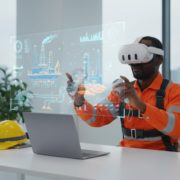
VR offers an additional layer of practical learning by placing trainees inside realistic, computer-generated industrial environments. Workers can explore facilities, interact with virtual equipment and respond to simulated operational situations while instructors monitor their performance.
Nigerian technology companies are also contributing to this emerging opportunity. Lagos-based Insightful3d, an extended reality (XR) and 3D technology company, is among the local firms developing immersive solutions for industrial training, facility familiarisation and operational visualisation.
The growing availability of such local expertise presents an opportunity for Nigerian energy companies to adopt immersive technologies tailored to their operational environments rather than relying exclusively on generic training content developed for other markets.
Practical Applications Across Oil and Gas Operations
One of VR’s most valuable applications is industrial safety and emergency response training. Personnel can rehearse responses to gas leaks, fire outbreaks, confined-space incidents and emergency evacuations within controlled simulations.
Rather than learning only through written procedures, trainees can experience scenarios that require them to identify hazards, make decisions and understand the consequences of their actions. Such simulations can complement existing Health, Safety and Environment (HSE) programmes.

Another important application is facility familiarisation and workforce onboarding. New employees assigned to offshore installations, gas processing plants or refineries can explore virtual representations of these environments before physically visiting the facilities.
This can improve their understanding of equipment layouts, operational zones, access routes and safety requirements, particularly where physical access is restricted or expensive.
VR also presents opportunities for equipment operation and maintenance training. Interactive simulations can allow technicians to study equipment components, practise approved maintenance procedures and understand operational sequences before handling actual machinery.
Beyond training, immersive facility models can support engineering discussions, stakeholder presentations, remote site orientation and the communication of complex technical information.
These applications demonstrate that VR is not simply another visual presentation technology. When properly developed, it can become a practical component of workforce development and operational readiness.
Future Opportunities: Digital Twins, AI and Connected Operations
The longer-term opportunities extend beyond standalone training simulations.
As Nigeria’s energy industry advances its digital transformation efforts, VR could increasingly connect with technologies such as digital twins, artificial intelligence and industrial data platforms.
Digital twins, for example, can provide interactive digital representations of physical facilities. When combined with immersive visualisation, they could enable engineers and technical teams to explore asset configurations, review operational scenarios and better understand complex industrial systems.
Artificial intelligence could also support more adaptive training experiences, where simulated scenarios respond to the decisions made by trainees and provide personalised feedback.
In the future, integrated XR experience centres could bring together immersive learning, digital facility exploration, technical collaboration and operational visualisation within a shared environment.
These developments offer possibilities for operators across upstream, midstream and downstream activities, particularly as companies seek to strengthen local technical capabilities and improve knowledge transfer.
Making Adoption Practical for Nigerian Operators
Despite its potential, successful VR adoption requires more than purchasing headsets or installing simulation software.
The technology must address clearly defined operational challenges, reflect approved industry procedures and deliver outcomes that organisations can evaluate.
For many companies, the most practical approach may be to begin with targeted applications such as safety training, equipment familiarisation or emergency response simulations before expanding into more sophisticated immersive systems.
This phased approach allows organisations to assess training effectiveness, user acceptance, deployment requirements and potential returns before committing to broader implementation.
A more detailed examination of how virtual reality can transform Nigeria’s oil and gas industry highlights the opportunities for integrating immersive technologies into workforce training, operational familiarisation and industrial safety.
Preparing Nigeria’s Energy Workforce for the Future
As Nigeria seeks to strengthen the competitiveness of its energy sector, investment in workforce capability and operational excellence will remain critical.
Virtual Reality cannot replace physical field experience, engineering expertise or established safety practices. However, it can make important aspects of training more accessible, repeatable and engaging while giving personnel additional opportunities to practise before entering high-risk environments.
For oil and gas companies, the question is increasingly shifting from whether immersive technologies have industrial applications to where their adoption can deliver meaningful operational value.
Organisations that begin exploring these opportunities today may be better positioned to develop the technical capabilities, safety culture and digital readiness required for the next generation of energy operations.