By

By Osasome, C.O
From Yaba’s technology hubs to the crowded markets of Lagos, Nigeria’s digital transformation is becoming increasingly visible in everyday life.
RELATED: Nigeria’s internet boom: Why broadband subscriptions are rising despite a widening digital divide
Nigerians are streaming music, transferring money, attending virtual meetings, running businesses, taking online courses and staying connected with families abroad—and they are consuming data at a scale that is reshaping the country’s economy.

ALSO READ: NDPC in Q2 2026: From awareness to enforcement as Nigeria’s data economy takes centre stage
The numbers reveal the magnitude of the shift. Nigeria’s consumers used an estimated 10.2 million terabytes of internet data in the first seven months of 2026, while spending on data reached about ₦3.67 trillion in the first half of the year.
The surge points to a profound change in the country’s communications economy: Nigeria is moving decisively from a voice-centric telecommunications market towards a data-driven digital economy, where connectivity is increasingly essential to work, commerce, education, entertainment and social life.
Nigeria’s Data Appetite Is Getting Bigger
Latest industry statistics from the Nigerian Communications Commission (NCC) point to rapidly changing patterns of connectivity.
Telecommunications operators added more than 12.8 million new SIM cards within seven months, reinforcing the scale of demand for mobile connectivity.
Consumer spending on internet data reached approximately ₦3.67 trillion in the first half of 2026, representing a 43 percent increase over the ₦2.57 trillion recorded in the preceding year.
Behind that spending are millions of everyday activities.
For one Nigerian, data means a video call with a child studying abroad. For another, it is the mobile banking connection that allows a market trader to receive payments without a traditional bank branch. For a student, it can mean access to lectures and digital libraries. For a small business owner, it can mean reaching customers hundreds or thousands of kilometres away.
Data has consequently evolved from a telecommunications product into an increasingly important economic input.
MTN’s ₦1.62 Trillion Infrastructure Bet
Few companies illustrate the scale of this transformation better than MTN Nigeria.
The operator has deployed approximately ₦1.62 trillion since January 2025 towards network expansion and capacity, supporting base-station upgrades, spectrum deployment and fibre expansion across underserved areas.
The investment is translating into stronger demand for data. MTN Nigeria reported ₦1.699 trillion in data revenue in the first half of 2026, representing a 38.4 percent year-on-year increase.
The operator has also crossed the 100 million active subscriber milestone, underscoring the scale of its role in Nigeria’s connectivity ecosystem.
But perhaps more revealing is how much existing customers are consuming.
Average monthly data consumption per MTN user rose to 14.8GB, a 15.2 percent year-on-year increase. Median mobile download speeds also improved from approximately 16.5Mbps at the beginning of the year to 20Mbps by mid-year.
Those figures tell a story of more than subscriber growth. Nigerians are using their connections more intensively as digital services become embedded in everyday life.
The Infrastructure Behind Nigeria’s Data Boom
A data economy of this scale requires enormous infrastructure.
MTN Nigeria’s ₦620.5 billion capital expenditure in the first half of 2026 forms part of a broader infrastructure footprint involving roughly 66,000 operational sites nationwide.
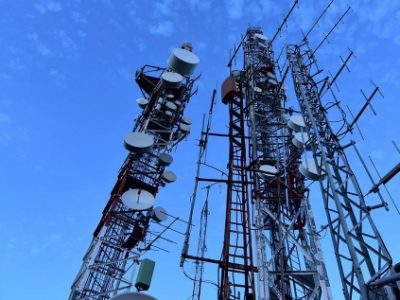
The operator is also expanding 5G, which has reached 730 sites across 27 states, while fibre deployment is extending high-speed connectivity into areas that historically struggled with reliable broadband.
Yet building and maintaining this infrastructure remains difficult.
MTN Chief Technology Officer Yahaya Ibrahim disclosed that the operator deals with approximately 450 incidents of infrastructure vandalism every day, ranging from accidental fibre cuts during construction to deliberate attacks on telecommunications towers.
The scale of the challenge highlights an often-overlooked reality of Nigeria’s digital economy: every video call, mobile transfer or streaming session depends on physical infrastructure that must be continuously powered, protected and maintained.
Data Demand Is Rising Despite Higher Costs
Nigeria’s data boom is also occurring against considerable economic pressure.
Telecommunications operators are dealing with higher operating costs, including significantly increased diesel prices and foreign-exchange pressures on imported equipment and services.
Mobile data tariffs were adjusted upwards by 50 percent in January, representing the first major price revision in almost a decade.
Yet rather than causing demand to collapse, data consumption has continued to rise.
That resilience suggests something important about the changing Nigerian consumer: connectivity is increasingly being treated as a necessity rather than a discretionary expense.
Smartphones Are Expanding the Digital Population
The growing importance of data is closely connected to smartphone adoption.
National smartphone penetration has reached 66.4 percent, providing millions of Nigerians with direct access to mobile banking, social media, online education, e-commerce, streaming platforms, digital government services and remote work.
For many Nigerians, the smartphone has effectively become the primary gateway to the internet.
This is particularly significant in a country where traditional infrastructure and physical access to services remain uneven. Mobile connectivity can bypass some of those limitations, allowing individuals and businesses to participate in digital markets without requiring extensive physical infrastructure.
The Energy Problem Behind Every Gigabyte
There is, however, another less visible cost behind Nigeria’s digital expansion: energy.
Telecommunications networks require enormous amounts of power to keep base stations, data infrastructure and other network equipment running around the clock.
In 2025, diesel accounted for 58.11 percent of MTN Nigeria’s energy mix, followed by independent power producer gas at 23.63 percent and the national grid at 18.04 percent. Green energy accounted for only 0.05 percent.
That energy profile exposes telecommunications operators to fuel-price volatility and creates an important connection between Nigeria’s energy transition and the affordability of digital services.
MTN is therefore beginning to increase its renewable-energy footprint.
In June, the company signed its first utility-scale solar agreement through its First WATT partnership, securing 34MW of solar capacity across eight major technical hubs.
The objective is not simply environmental. Reducing dependence on diesel could help lower the long-term cost of operating the network—and potentially improve the economics of delivering every gigabyte of data to customers.
The Human Face of Nigeria’s Data Economy
Behind the billions of naira and millions of terabytes are people whose daily routines are being quietly transformed.
A student can now attend an online lecture without travelling to another city. A trader can receive a digital payment from a customer instantly. A young entrepreneur can run a business from a laptop and sell to customers outside Nigeria. Families separated by geography can maintain relationships through video calls.
These users are more than statistics.
Their growing demand for data reflects economic aspiration, social connection and participation in a global digital economy.
The data economy is therefore not simply about how much Nigerians consume. It is increasingly about what Nigerians are able to do because they are connected.
The Next Battle: Affordability, Reliability and Coverage
The extraordinary growth in data consumption creates a difficult balancing act for telecom operators and policymakers.
Infrastructure must expand fast enough to meet demand, but the cost of doing so cannot rise indefinitely without eventually affecting consumers.
Operators must simultaneously deal with energy costs, vandalism, spectrum requirements, foreign-exchange pressures, equipment costs and the enormous capital required to expand fibre and mobile networks.
For Nigeria, the policy challenge is equally significant: the country must create an environment in which operators can continue investing while ensuring that broadband and data services remain accessible to households and businesses.
Nigeria’s Digital Infrastructure Race Moves Into 2027
MTN plans to deepen 5G coverage in additional states, increase the share of renewable energy powering its network and extend high-speed fibre backhaul into areas that have historically lacked reliable broadband.
Those investments will become increasingly important as demand moves beyond conventional smartphone activities into cloud computing, artificial intelligence, digital commerce, fintech, remote work and data-intensive enterprise applications.
The more Nigeria digitises, the more data becomes an essential component of economic infrastructure.
Nigeria Is No Longer Asking Whether It Will Go Digital
Nigeria’s ₦3.67 trillion data economy is ultimately a reflection of a much larger transformation.
The country is no longer merely building a telecommunications market. It is building the infrastructure of a digital economy in which connectivity underpins how people earn, learn, trade, communicate and innovate.
The real question now is how Nigeria sustains that momentum.
That means expanding broadband and fibre, protecting critical infrastructure, investing in renewable energy, keeping connectivity affordable, developing digital skills and creating policies capable of attracting the enormous capital required for the next phase of digital infrastructure.
The numbers may describe terabytes, subscribers, gigabytes and naira. But the bigger story is human.
Nigeria is becoming a data economy—and millions of Nigerians are already living inside it.