By

Nigeria is moving to expand its satellite communications capacity and strengthen digital connectivity across Africa with the development of a new geostationary telecommunications satellite, NigComSat-2A.
RELATED: FEC approves NIGCOMSAT-2A and 2B as Nigeria strengthens digital sovereignty and satellite capacity
Thales Alenia Space, a joint venture between Thales, which holds 67 percent, and Leonardo, with 33 percent, has signed a contract with Nigeria’s government-owned Nigerian Communications Satellite Limited (NIGCOMSAT) for the development of the satellite.
NigComSat-2A is expected to provide secure and reliable communications services, including high-quality television broadcasting, fast and stable internet connectivity and digital applications such as voice calls and streaming.


The project is also expected to extend access to digital services in underserved and remote communities while supporting the growing connectivity requirements of households, businesses, public institutions and industries across Africa.
NigComSat-2A Targets Africa’s Connectivity Gap
The new satellite will operate from geostationary orbit and is designed to strengthen communications infrastructure across a broad African footprint.
With a launch mass of nearly four tonnes, NigComSat-2A will cover an area extending from West and Central Africa to Southern Africa.
Its geographic reach is particularly significant for communities and economic activities located in areas where terrestrial telecommunications infrastructure remains limited, expensive or difficult to deploy.
By providing an additional layer of satellite-based connectivity, the project is expected to increase the flexibility and resilience of communications infrastructure while responding to Africa’s rapidly growing demand for broadband and digital services.
Satellite to Support Broadband, Broadcasting and Digital Services
NigComSat-2A is being positioned as more than a traditional communications satellite.
Its services will include television broadcasting, internet access, voice communications, streaming and other digital applications, potentially giving operators and service providers greater capacity to serve communities beyond the reach of conventional terrestrial networks.
For Nigeria, the project also represents an opportunity to strengthen its role in the continent’s satellite communications ecosystem.
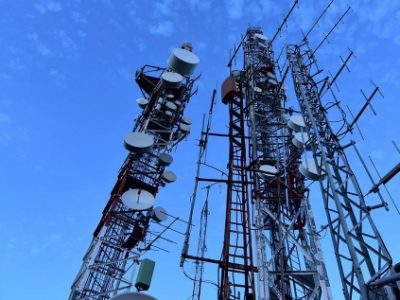
Improved satellite connectivity can complement fibre, mobile networks and other terrestrial infrastructure, particularly in remote locations where laying fibre or deploying extensive terrestrial infrastructure may not always be commercially viable.
NIGCOMSAT: Satellite Capacity as a Digital Transformation Tool
NIGCOMSAT Managing Director and Chief Executive Officer, Nkechi Jane Egerton-Idehen, described the contract as a major step in Nigeria’s digital transformation agenda.
“The signing of this contract represents a bold step in Nigeria’s journey toward digital transformation,” Egerton-Idehen said.
She said NigComSat-2A would strengthen Nigeria’s satellite communications capacity while expanding access to broadband and digital services, particularly for underserved and remote communities.
According to her, the project reflects NIGCOMSAT’s broader commitment to connectivity, innovation and economic growth across Africa.
The satellite, she added, is expected to contribute to Africa’s digital future by providing infrastructure capable of supporting expanding connectivity needs.
Thales Alenia Space Sees Growing Demand for Digital Connectivity
Hervé Derrey, President and CEO of Thales Alenia Space, said the company was pleased to partner with NIGCOMSAT on the project.
He said NigComSat-2A would enable NIGCOMSAT to strengthen its competitive position by delivering reliable, high-quality services in response to increasing global demand for connectivity and digital content.
Derrey also linked the project to the performance of Thales Alenia Space’s Spacebus B2 platform, which he described as known for reliability, robustness and time-to-market efficiency.
More Than 15 Years of Expected Service
NigComSat-2A will be based on Thales Alenia Space’s Spacebus B2 platform and is expected to have an operational in-orbit service life of more than 15 years.
That lifespan gives the project a potentially long-term role in Nigeria and Africa’s digital infrastructure development, particularly as demand for broadband, digital content, cloud services and connected applications continues to grow.
The satellite’s resilience and geographic coverage could also provide an additional layer of redundancy for communications networks, helping to diversify the infrastructure supporting Africa’s digital economy.
Satellite Infrastructure Becomes More Strategic for Africa
Africa’s connectivity challenge cannot be addressed by terrestrial networks alone.
While fibre-optic cables and mobile networks remain central to broadband expansion, satellite infrastructure can extend connectivity to areas where population density, terrain, distance or infrastructure costs make conventional deployment challenging.
This makes projects such as NigComSat-2A increasingly relevant to the continent’s digital transformation ambitions.
For Nigeria, the strategic value extends beyond providing bandwidth. A stronger national satellite capability can support broadcasting, enterprise connectivity, public-sector communications and digital inclusion while creating opportunities for Nigerian institutions and businesses to participate more actively in the space and digital economy.
NigComSat-2A and Nigeria’s Digital Economy Ambition
The development of NigComSat-2A comes as demand for reliable connectivity continues to expand across African households, businesses and public institutions.
As more economic activity moves online, connectivity has become foundational to digital financial services, e-commerce, education, healthcare, entertainment, government services and enterprise operations.
The success of the new satellite will therefore be measured not simply by its launch or orbital operation, but by how effectively its capacity translates into affordable, reliable and accessible digital services.
For Nigeria, the broader ambition is clear: strengthen satellite infrastructure, complement terrestrial networks and help close the connectivity gap that continues to exclude millions of Africans from the full benefits of the digital economy.