By
By Osasome, C.O
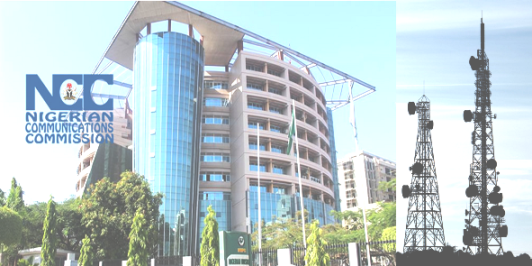
The Nigerian Communications Commission (NCC) is moving to address some of the structural challenges confronting Nigeria’s telecommunications ecosystem, from the growing security risks surrounding mobile identities to persistent network quality concerns and the need to reposition the country’s digital skills infrastructure for a more sustainable future.
RELATED: NCC raises alarm over 5,000 Fibre Cuts in H1 2026, urges contractors to protect telecom infrastructure
At the centre of the Commission’s latest regulatory agenda is the planned October 2026 go-live of the Telecommunications Identity Risk Management System (TIRMS), a technology platform designed to strengthen the governance of telecommunications identities, particularly mobile numbers that have increasingly become gateways to banking, social media, digital commerce and other online services.


The development emerged from the NCC Board’s 110th Meeting held on September 9, 2026, where the Board reviewed strategic priorities, operational performance and developments across the telecommunications industry based on reports submitted by the Executive Vice Chairman/Chief Executive Officer, Dr Aminu Maida.
But TIRMS is only one part of a broader regulatory push.
The Board also reviewed progress by mobile network operators in deploying additional infrastructure, noted rising network disruptions associated with fibre cuts, considered the strategic repositioning of the Digital Bridge Institute (DBI), reviewed the proposed zero-rating of educational platforms and content, and expressed concern over the resurgence of call masking.
Together, the decisions reveal an industry increasingly being treated not merely as a connectivity business, but as critical national digital infrastructure.
TIRMS: Protecting the Identity Behind the Mobile Number
For millions of Nigerians, a mobile number has become much more than a means of making a call.
It can be linked to a bank account, mobile wallet, social media profile, email account, e-commerce platform, government service or authentication system.
That transformation has created a new risk.
When a telecommunications identity is misused, reassigned or recycled without adequate safeguards, the consequences can extend far beyond telecommunications. A compromised or poorly managed mobile identity can potentially expose subscribers to fraud, unauthorised access and disruption of digital services that depend on the number as an identity or authentication mechanism.
This is the strategic significance of TIRMS.
The system, together with its associated business rules, is scheduled to go live in October 2026. Its purpose is to strengthen the governance of telecommunications identities and reduce risks associated with the misuse, reassignment and recycling of identities, particularly mobile numbers.
In an economy becoming increasingly dependent on digital authentication, protecting the number increasingly means protecting the subscriber’s digital identity.
TIRMS therefore represents an important evolution in telecommunications regulation: from managing numbers primarily as network resources to recognising them as increasingly important components of the wider digital identity ecosystem.
When a Phone Number Becomes a Digital Key
The significance of TIRMS becomes clearer when viewed from the perspective of an ordinary subscriber.
A mobile number can be the gateway through which a person receives a banking authentication code. It can be used to recover a social media account, authorise a transaction, access an online platform or communicate with customers.
This creates a chain of dependency:
Mobile identity → authentication → digital service → financial and personal access.
A weakness at the first stage can therefore create vulnerabilities further down the chain.
The NCC’s move towards stronger identity-risk management reflects this changing reality.
The telecommunications industry is no longer operating in isolation. Its infrastructure and identity systems increasingly underpin Nigeria’s financial technology ecosystem, digital public services, e-commerce and broader digital economy.
Device Management Adds Another Layer of Digital Trust
The NCC Board also noted that its Device Management System (DMS) is now live.
The platform is intended to strengthen type-approval compliance by improving the Commission’s ability to verify whether devices circulating in the Nigerian market comply with applicable requirements.
It is also expected to help discourage the circulation of non-compliant devices and support efforts to combat mobile device theft by enabling reported stolen devices to be blocked across Nigerian networks.
Together, DMS and TIRMS point towards a broader regulatory architecture in which the NCC is seeking greater visibility over the three critical components of the mobile ecosystem:
the subscriber, the device and the network.
This is increasingly important as mobile connectivity becomes the foundation for digital banking, commerce, government services and personal communications.
The Board nevertheless stressed that such technology platforms must be deployed in ways that protect consumers, support lawful digital services, strengthen market integrity and comply with applicable legal, privacy and data protection requirements.
Network Expansion Must Translate Into Better Quality of Service
Identity security can protect the subscriber, but there is another basic requirement for a functioning digital economy: the network must work.
The NCC Board noted substantial progress by Mobile Network Operators (MNOs) in implementing commitments to expand network coverage and capacity and improve Quality of Experience.
Of the 12,179 coverage and capacity sites previously committed by operators, 8,526 have now been deployed, representing approximately 70 percent of the commitment.
That marks a significant acceleration from the approximately 5,000 sites reported at the previous Board meeting.
The numbers matter because Nigeria’s digital economy is expanding faster than the infrastructure supporting it in many locations.
More smartphones, greater data consumption, cloud applications, digital payments, online education and emerging AI services all translate into higher demand for reliable network capacity.
Network expansion is therefore not simply an industry investment.
It is an investment in the operating infrastructure of the digital economy.
More Towers and Fibre Mean More Than Better Bars on a Phone
For subscribers, the real test of network investment is not the number of towers deployed or the amount of capital committed.
It is whether a call connects when needed, whether a payment goes through, whether a video conference remains stable, whether an online class can continue and whether a business can reliably serve customers.
Infrastructure expansion has to translate into those everyday experiences.
Additional sites can improve coverage and capacity. Fibre deployment can increase backhaul capacity. Network modernisation can improve resilience and performance.
But the NCC’s latest observations also demonstrate that simply building more infrastructure is not enough.
The infrastructure itself has to be protected.
Fibre Cuts Threaten Nigeria’s Digital Economy
The Board noted that fibre cuts contributed to a sharp rise in network disruptions in June.
That creates an uncomfortable contradiction for Nigeria’s digital transformation.
The country can continue investing billions in telecommunications infrastructure, but if critical fibre routes are repeatedly damaged, the benefits of that investment can be undermined.
Fibre infrastructure has become critical national infrastructure because it carries the data supporting mobile communications, broadband services, businesses, financial transactions and increasingly digital government.
The next phase of telecommunications expansion must therefore combine more infrastructure with stronger infrastructure protection.
This means greater attention to resilience, route protection, redundancy, rapid restoration and cooperation among telecommunications operators, government authorities, contractors and communities.
For subscribers, resilience ultimately means one simple thing: a network that remains available when they need it.
DBI Repositioning: A Strategic Question About Nigeria’s Digital Skills Future
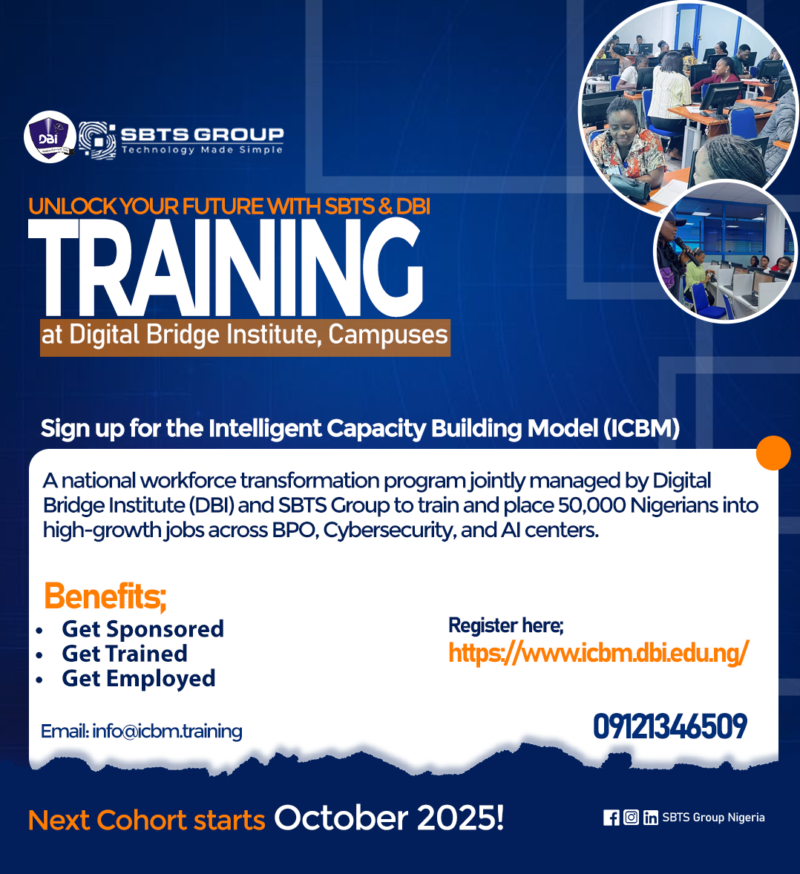
Perhaps less immediately visible to consumers—but potentially significant over the longer term—is the NCC Board’s consideration of the strategic repositioning of the Digital Bridge Institute (DBI).
The Board reviewed recommendations for repositioning the institution and developing a strategic roadmap designed to strengthen its relevance and long-term sustainability.
This is important because Nigeria’s digital transformation requires more than connectivity.
The country needs people capable of designing, operating, securing and commercialising the technologies being deployed.
As Nigeria moves deeper into cloud computing, artificial intelligence, cybersecurity, data infrastructure, digital government and advanced telecommunications, the demand for relevant technical and professional skills will continue to grow.
DBI therefore has an opportunity to evolve beyond a traditional digital training institution into a more strategically positioned national digital-capacity platform.
The Roadmap Could Determine DBI’s Next Chapter
The Board’s decision to adopt a phased approach and consider two independent consultancies is particularly significant.
The first consultancy is expected to undertake a comprehensive assessment of DBI’s:
- structure;
- operations;
- human resources; and
- institutional position.
The second will assess the commercial and legal viability of the proposed repositioning.
That approach suggests that the question is not simply how to rename, restructure or expand DBI.
The more fundamental question is:
What should DBI become in Nigeria’s next phase of digital development, and how can it remain relevant and financially sustainable?
A credible strategic roadmap could give DBI a clearer role in addressing Nigeria’s digital skills deficit while ensuring that the institution is capable of responding to rapidly changing technology markets.
Its future relevance will ultimately depend on whether it can connect training to actual industry demand, emerging technologies and measurable economic outcomes.
From Training Centre to Digital-Economy Institution
Nigeria’s digital economy is changing rapidly.
The skills required five years ago are not necessarily the skills that will dominate the next five.
AI engineering, cloud architecture, cybersecurity, data analytics, digital infrastructure management and other emerging disciplines are becoming increasingly important.
A repositioned DBI could potentially become a bridge between government policy, industry demand and workforce development.
That would give the institution a larger strategic purpose: not merely teaching people how to use digital tools, but helping create the human capital required to build and sustain Nigeria’s digital infrastructure.
The proposed independent assessments could therefore become an important foundation for determining whether DBI can make that transition successfully.
Free Educational Platforms Could Expand Digital Inclusion
The Board also reviewed progress towards establishing a framework for zero-rating educational platforms and content.
The initiative, developed through engagement with industry players and other stakeholders, is intended to improve students’ access to digital educational resources.
The Board commended the collaboration of the Federal Ministry of Education and other stakeholders and noted that the initiative was scheduled for official launch on September 10, with a go-live date of October 1, 2026.
The policy has particular significance because affordability remains one of the barriers to meaningful digital inclusion.
Connectivity is not truly inclusive if students can access the internet technically but cannot afford the data required to use educational resources.
Zero-rating selected educational platforms therefore has the potential to shift the conversation from access to connectivity towards access to useful digital content.
That distinction is increasingly important in Nigeria’s digital economy.
Call Masking Returns as a Threat to Market Integrity
While the NCC’s agenda is focused heavily on building the future, the Board is also confronting older problems that continue to undermine the telecommunications market.
The resurgence of call masking activities has raised fresh concerns.
The Board reaffirmed the NCC’s zero-tolerance position, describing call masking as unacceptable and a serious regulatory concern.
According to the Board’s assessment, the practice undermines legitimate telecommunications operations, distorts industry revenues and constitutes economic sabotage capable of adversely affecting the national economy.
The NCC said it would continue working with security and law-enforcement agencies as well as industry stakeholders to identify, prevent and eliminate the practice.
The Bigger Picture: Building a Trusted Digital Infrastructure
Taken together, the outcomes of the NCC’s 110th Board Meeting reveal a broader strategy.
TIRMS is about protecting telecommunications identities.
DMS is about protecting the integrity of devices and the network ecosystem.
Infrastructure expansion is about improving coverage, capacity and Quality of Experience.
Fibre protection is about network resilience.
DBI repositioning is about building the human capital required to sustain the digital economy.
Educational zero-rating is about making connectivity more useful and inclusive.
Action against call masking is about protecting market integrity.
These issues may appear unrelated when viewed separately. They are not.
They are components of the same emerging challenge: how Nigeria can build a telecommunications ecosystem that is connected, reliable, secure, inclusive and economically sustainable.
Nigeria’s Next Telecommunications Challenge Is Quality, Trust and Sustainability
For years, the central telecommunications question in Nigeria was how to connect more people.
That question remains important.
But the country’s digital maturity is creating new priorities.
It is no longer enough to have a mobile number. That identity must be secure.
It is no longer enough to have network coverage. The network must deliver a reliable experience.
It is no longer enough to build fibre. Critical infrastructure must be protected.
It is no longer enough to train people in basic digital literacy. The country needs advanced technical capabilities aligned with the technologies shaping the next economy.
And it is no longer enough for institutions such as DBI to exist. They must continuously demonstrate relevance, impact and sustainability.
The NCC’s latest decisions suggest that Nigeria’s telecommunications regulation is moving towards this broader understanding of the digital economy.
For the millions of Nigerians whose work, education, commerce, banking and social lives increasingly depend on mobile connectivity, the ultimate measure of these initiatives will not be regulatory announcements.
It will be whether their identity is safer, their connection is stronger, their services are more reliable, their education is more accessible and the digital economy creates more opportunities for them.
That is where the real meaning of digital transformation will ultimately be measured.